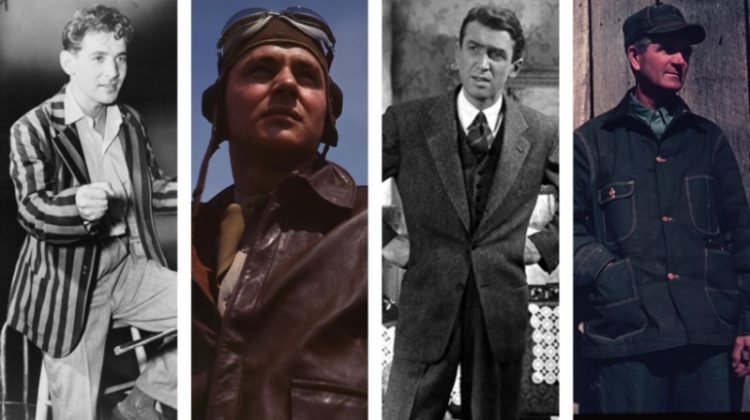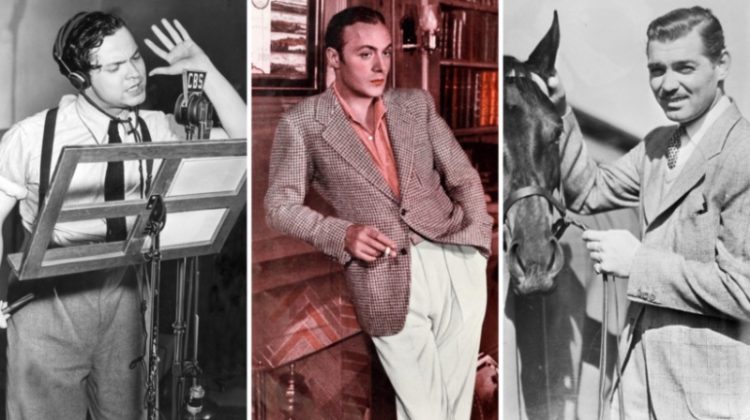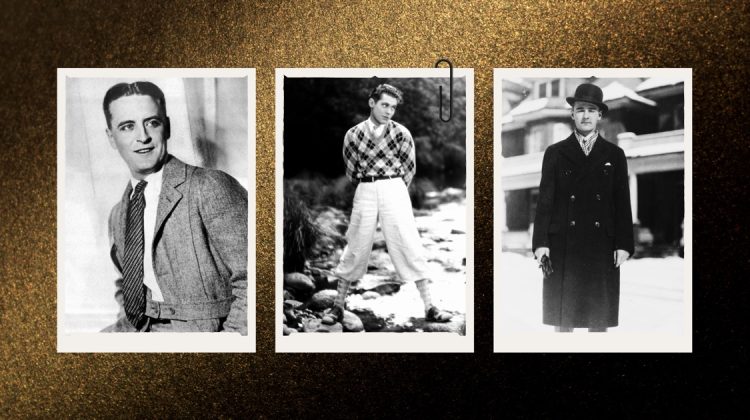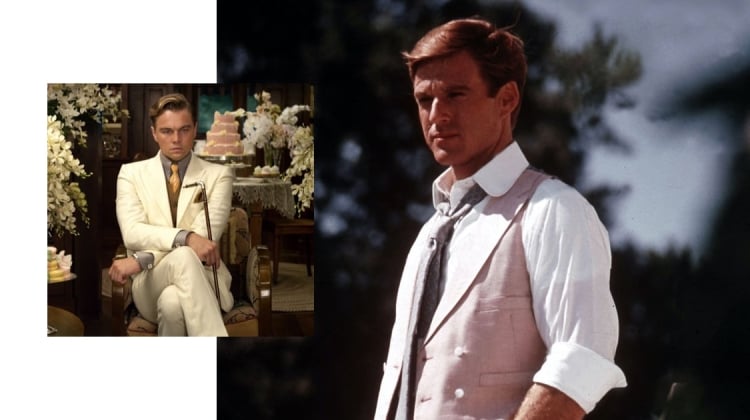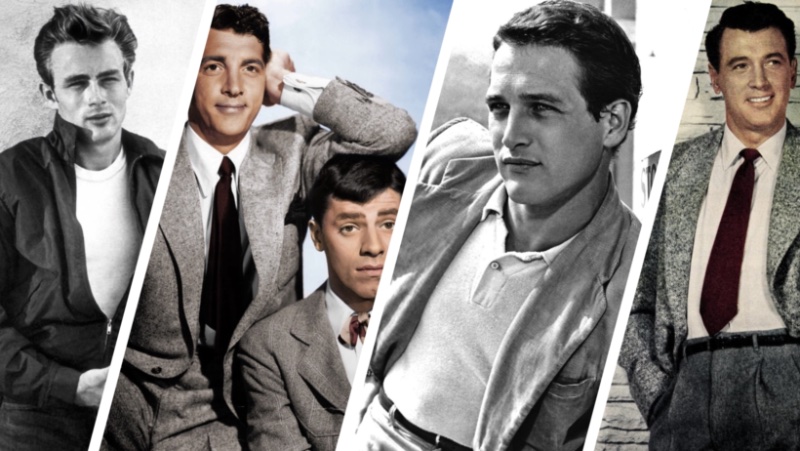
1950s men’s fashion developed along two increasingly visible paths. Suits, white shirts, and ties remained standard for business and many public occasions, while casual clothing gained ground through knit shirts, sport coats, chinos, denim, and other clothes associated with leisure. Younger men added another influence as rock and roll, Hollywood, and motorcycle culture gave leather jackets, jeans, and T-shirts new visibility.
The decade occupies a revealing place in the broader history of men’s fashion. Cary Grant and Gregory Peck represented its tailored ideal, while Marlon Brando, James Dean, and Elvis Presley helped make casual and youth-driven clothing increasingly influential.
TL;DR: What Did Men Wear in the 1950s?
Men in the 1950s wore suits for business and formal occasions, while casual wardrobes included sport shirts, knitwear, chinos, denim, and loafers. Sack suits, white dress shirts, ties, and polished leather shoes remained common, with Ivy League style offering a more relaxed approach to tailored and collegiate dress.
Youth culture introduced some of the decade’s most recognizable 50s style men adopted. Leather jackets, white T-shirts, jeans, and boots became associated with figures such as Marlon Brando and James Dean, while Elvis Presley brought greater color and rock and roll influence to the decade’s menswear.
1950s Men’s Fashion: The Postwar Shift
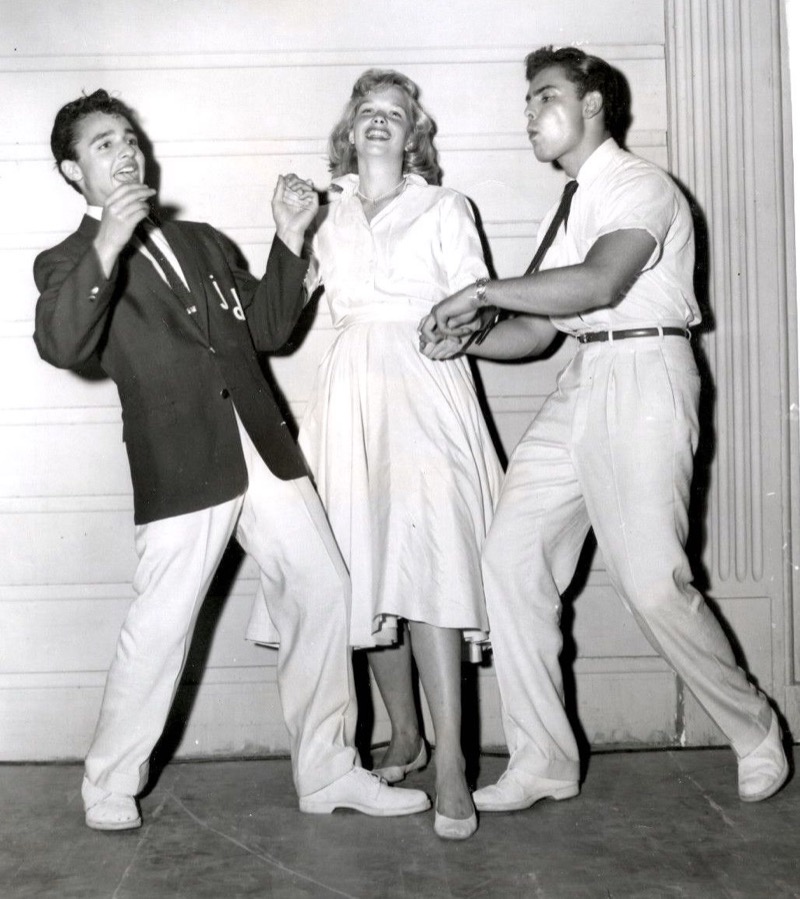
After the Second World War, American menswear returned to a civilian market no longer governed by wartime fabric restrictions. Suits remained central to business and formal dress, but an already established sportswear tradition continued to expand. Sport coats, knit shirts, casual button-downs, chinos, and other leisure clothes gave men a broader wardrobe beyond the suit.
The decade also brought greater visibility to teenage style. Rock and roll, Hollywood, and motorcycle culture helped associate jeans, T-shirts, leather jackets, and greased hairstyles with a younger generation. These clothes existed before the 1950s, but figures such as Marlon Brando, James Dean, and Elvis Presley gave them new cultural meaning and helped define the emerging image of the American teenager.
Manufacturing & the Rise of Ready-to-Wear
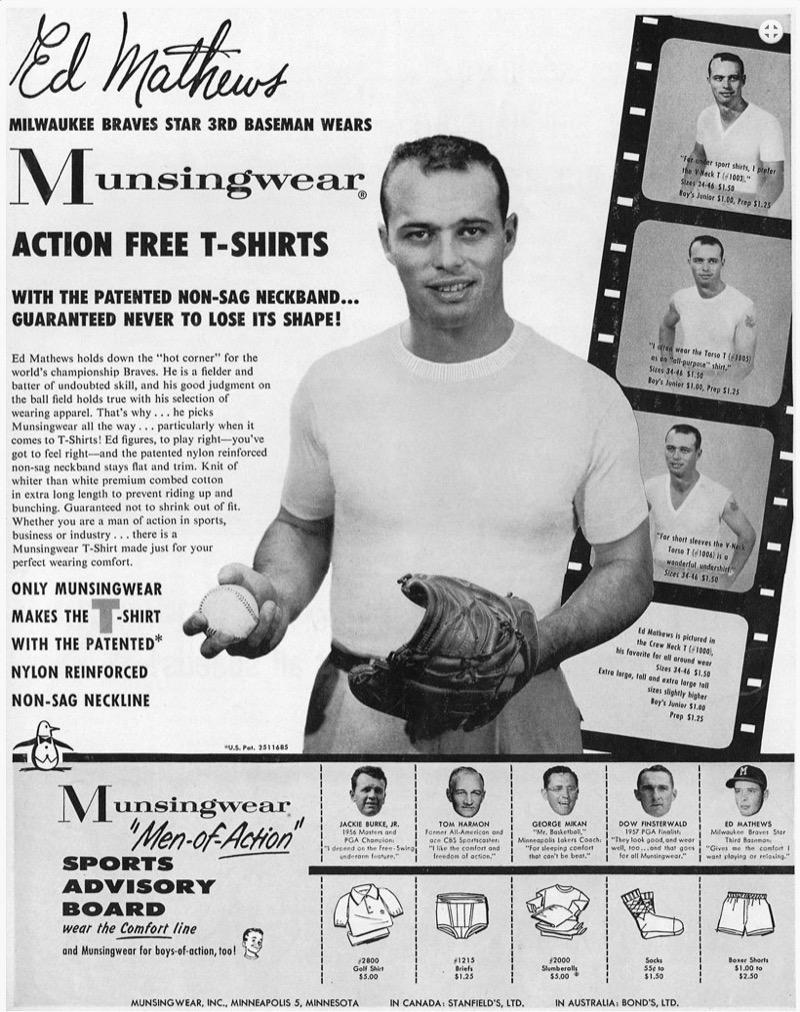
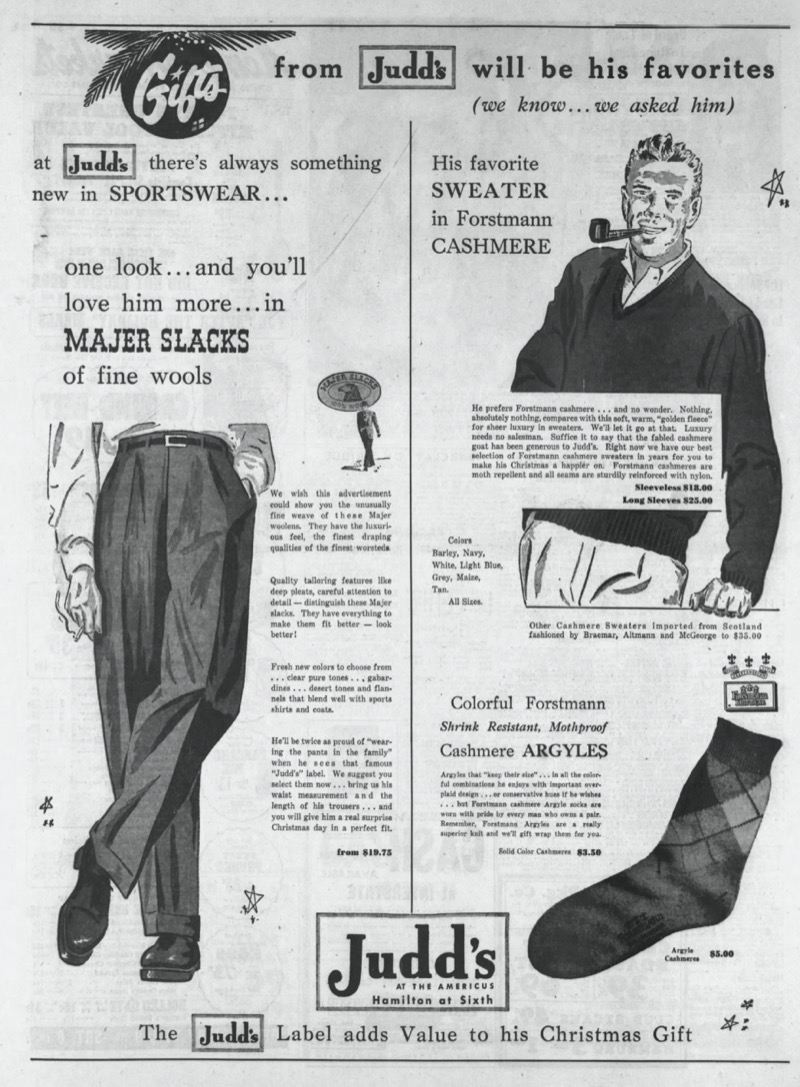
Ready-to-wear menswear was already a major industry by the 1950s, following decades of growth through factories, department stores, specialty shops, and mail-order catalogs. Postwar prosperity expanded that market further. Manufacturers could sell suits alongside increasingly specialized clothes for work, weekends, sports, and vacations, while national advertising introduced shoppers to new styles and branded goods.
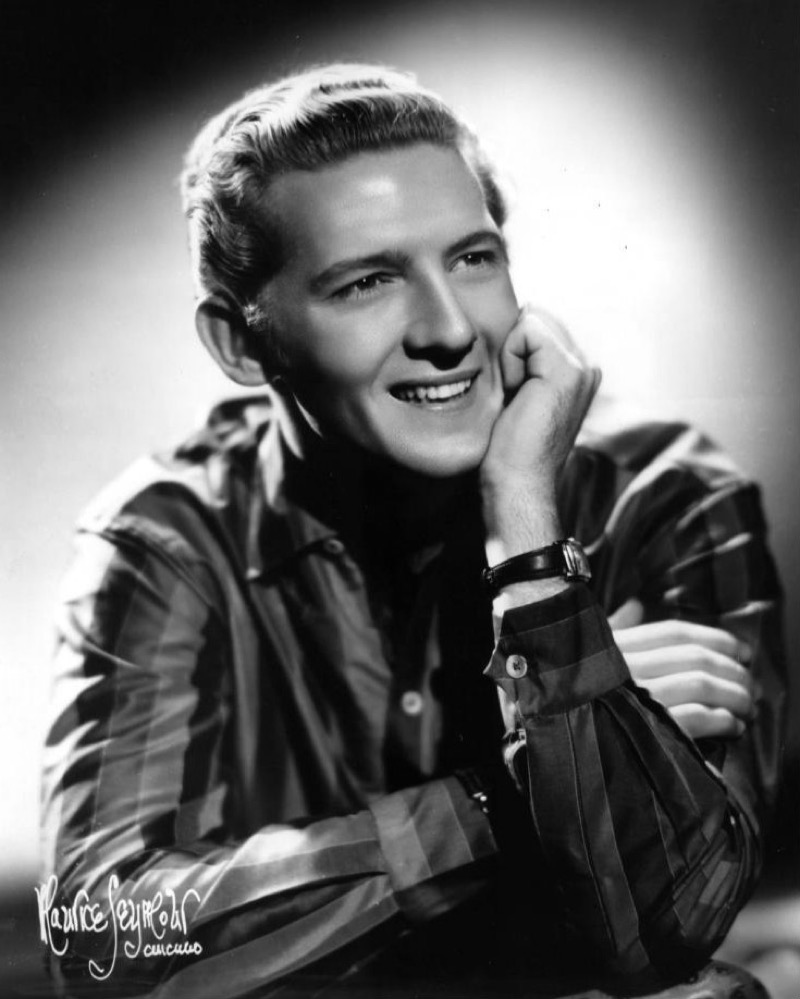
Manufacturing also changed what those clothes could be made from. Wool and cotton remained fundamental, while rayon, nylon, Dacron polyester, and other synthetic or blended fabrics became increasingly familiar to consumers. Their appeal included easier care, wrinkle resistance, and durability, qualities heavily promoted in a decade fascinated by convenience.
For 1950s fashion for men, the significance of mass production lay in greater choice and availability. A shopper could encounter business suits, sport shirts, knitwear, slacks, underwear, and leisure clothing across a growing retail market, helping distinct wardrobes for work and recreation become increasingly accessible.
Style Archetypes of the 1950s
The Gentleman (Cary Grant, Frank Sinatra)
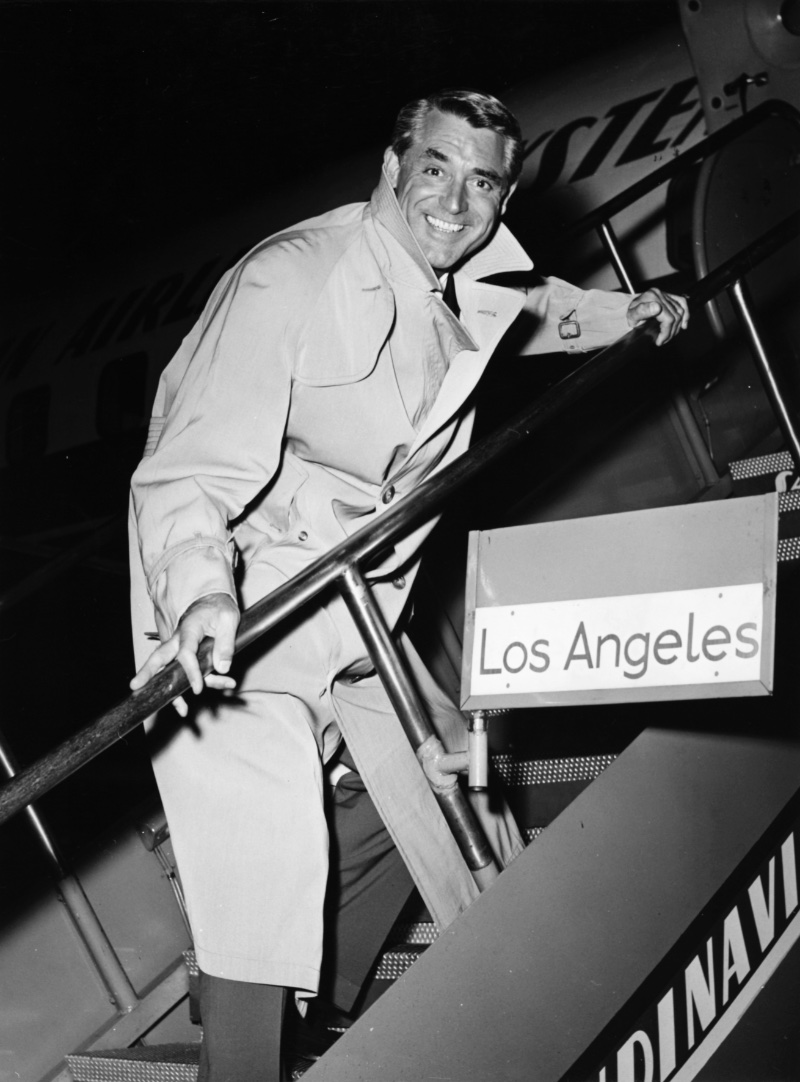
Film remained a powerful influence on men’s fashion during the 1950s. Leading men such as Cary Grant, Gregory Peck, and Rock Hudson gave audiences different models of well-dressed masculinity, moving between business suits, trench coats, tuxedos, sport coats, and casual knitwear on and off screen.
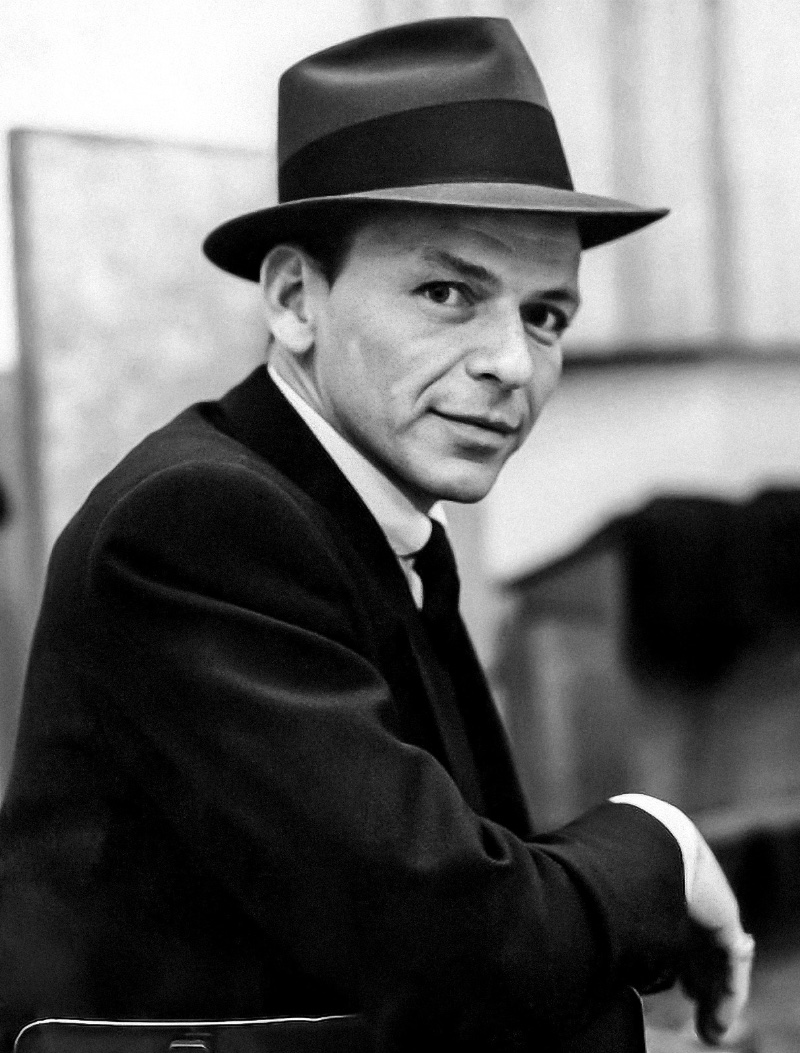
Frank Sinatra brought a sharper personality to the tailored wardrobe, favoring well-cut suits, dress shirts, ties, and his signature fedora. Dean Martin similarly made the suit and tie part of his public image, especially during the rise of the Rat Pack. For evening occasions, dinner jackets, tuxedos, and bow ties maintained the formal end of this archetype.
The Rebel (Brando, Dean, Greasers)
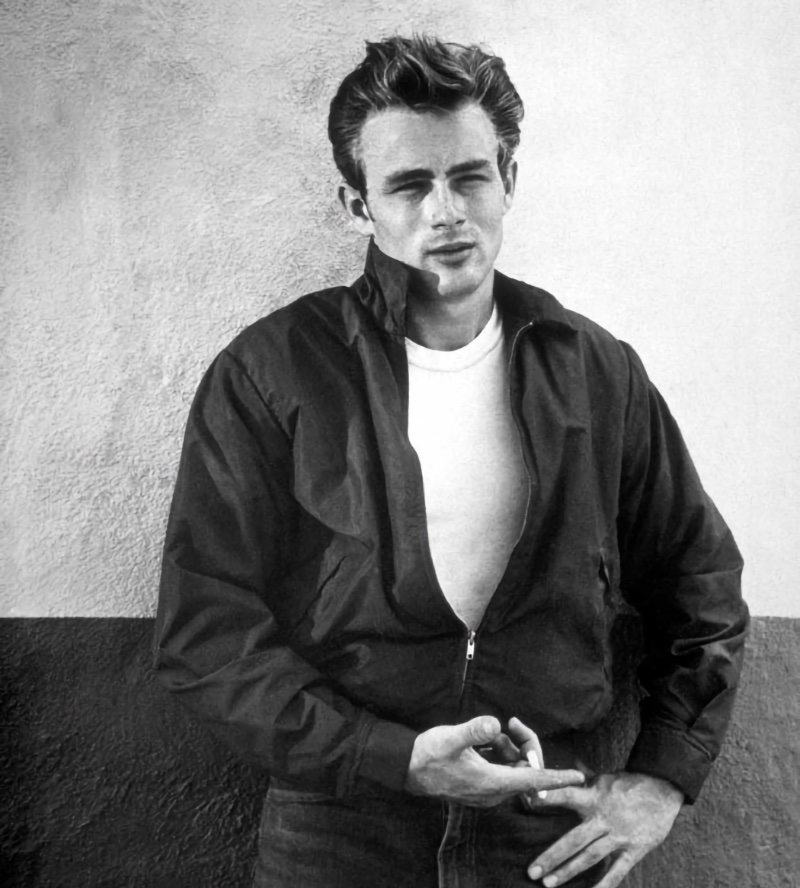
James Dean gave teenage rebellion one of its defining screen wardrobes in Rebel Without a Cause. His red windbreaker, white T-shirt, jeans, and boots offered a memorable alternative to the suits and sport coats associated with adult respectability.
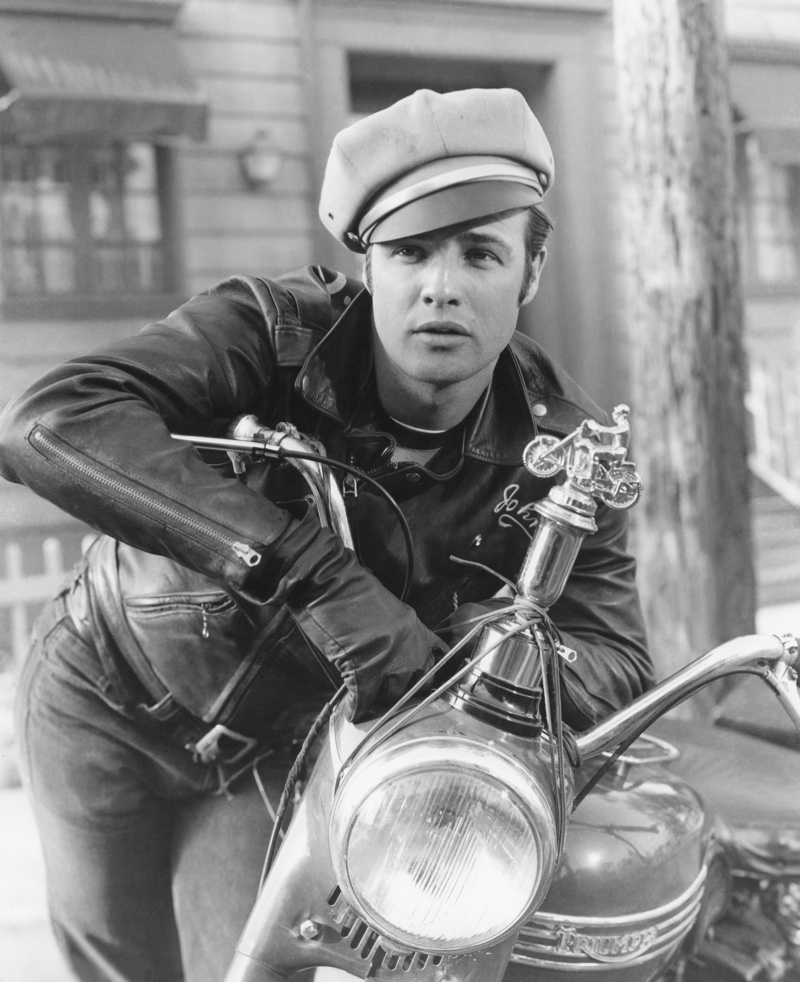
Marlon Brando supplied another lasting image with Johnny Strabler in The Wild One. His black leather motorcycle jacket, T-shirt, cuffed jeans, engineer boots, and biker cap drew from existing motorcycle clothing, but the film carried the look to a much larger audience. Greasers adapted similar elements alongside pompadours, sideburns, workwear, and denim.
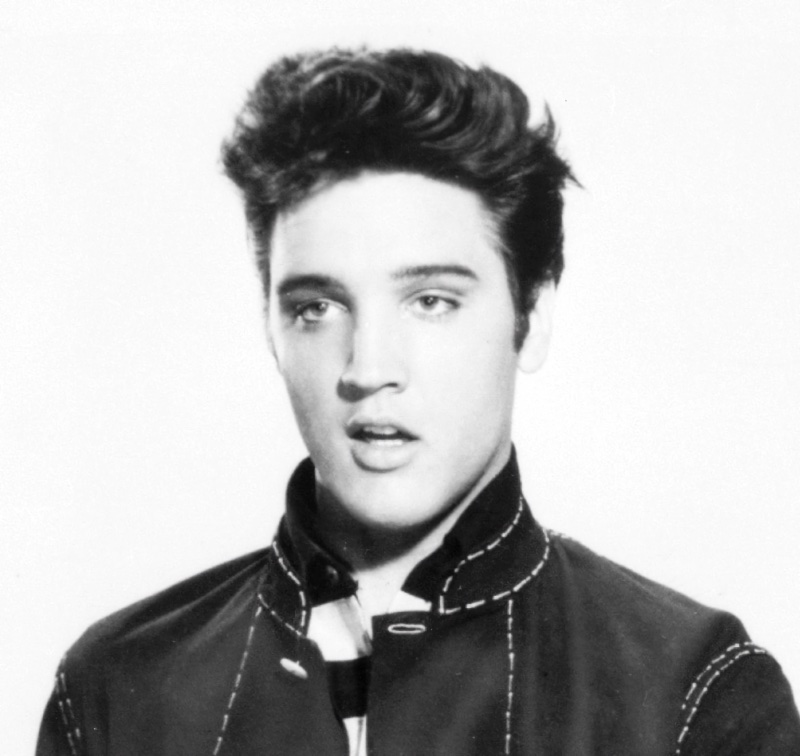
Elvis Presley brought a different energy to men’s 50s fashion. His 1950s wardrobe included open-neck shirts, high collars, pegged trousers, sport coats, loafers, and brightly colored clothes, complemented by his heavily styled pompadour. His 1956 recording of Blue Suede Shoes also helped turn the phrase into a lasting piece of rock and roll fashion mythology.
The Beatnik (Beat Generation)
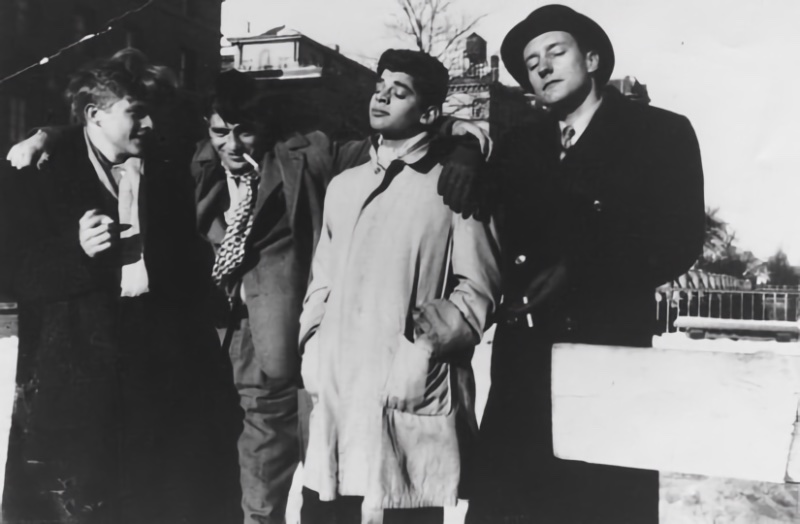
The Beat Generation, associated with writers such as Jack Kerouac, Allen Ginsberg, and William S. Burroughs, offered another model of male nonconformity. Their actual wardrobes varied from work shirts, chinos, jeans, sweaters, and casual jackets to conventional suits. Black turtlenecks and berets became increasingly associated with the popular image of the Beat and coffeehouse scene.
The term “beatnik,” coined by columnist Herb Caen in 1958, helped turn that broader movement into a recognizable cultural type. Clothing was secondary to the Beats’ literary and cultural rebellion, but casual, inexpensive dress became part of the public image that developed around them.
The Ivy League Prep (Varsity, Youth Culture)
Ivy League style gave 1950s fashion for men one of its most influential casual wardrobes. On college campuses, button-down Oxford shirts, crew-neck and V-neck sweaters, chinos, penny loafers, and natural-shouldered sport coats established a collegiate look that could move between the classroom and weekend wear. Athletics added another recognizable element through the varsity or letterman jacket.
Typically made with a wool body and contrasting leather sleeves, varsity jackets displayed school letters, team insignia, and patches earned through athletics. Worn with chinos or jeans, they connected campus identity with the expanding world of teenage casualwear.
Jeans and plain T-shirts could also be paired with canvas sneakers such as Converse Chuck Taylor All Stars. Together, prep, sportswear, and varsity clothing helped establish a distinctly American casual vocabulary that continued well beyond the 1950s.
The Teddy Boys (Edwardian Revival)
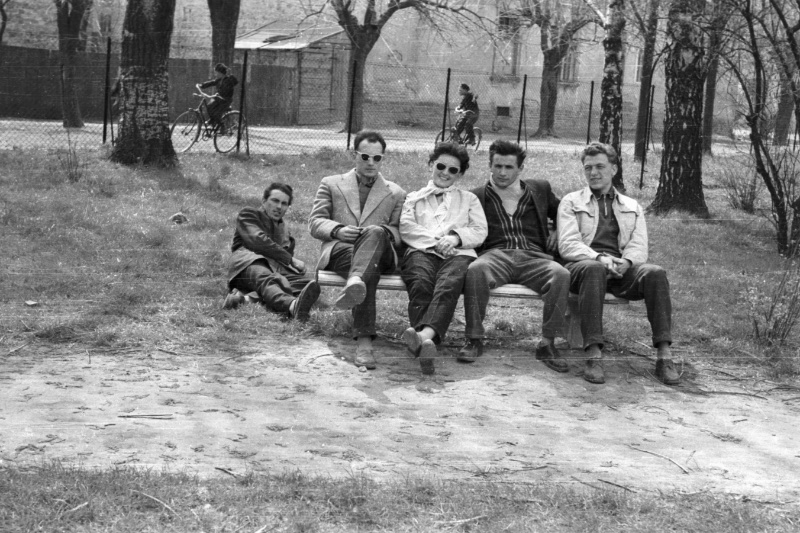
In 1950s British menswear, Teddy Boys turned elements of Edwardian-inspired tailoring into a youth uniform. The style developed during the early 1950s and became closely associated with Britain’s emerging teenage culture and, later in the decade, rock and roll.
The typical Teddy Boy outfit featured a long drape jacket, sometimes finished with a velvet collar, worn with a waistcoat and narrow drainpipe trousers. Slim Jim ties, bootlace ties, brocade waistcoats, watch chains, and carefully styled quiffs added further distinction.
Thick crepe-soled shoes, commonly called brothel creepers, completed the look. The combination of elongated tailoring, narrow trousers, substantial footwear, and exaggerated hair made the Teddy Boy immediately recognizable and established one of Britain’s first major postwar youth styles.
1950s Men’s Suits
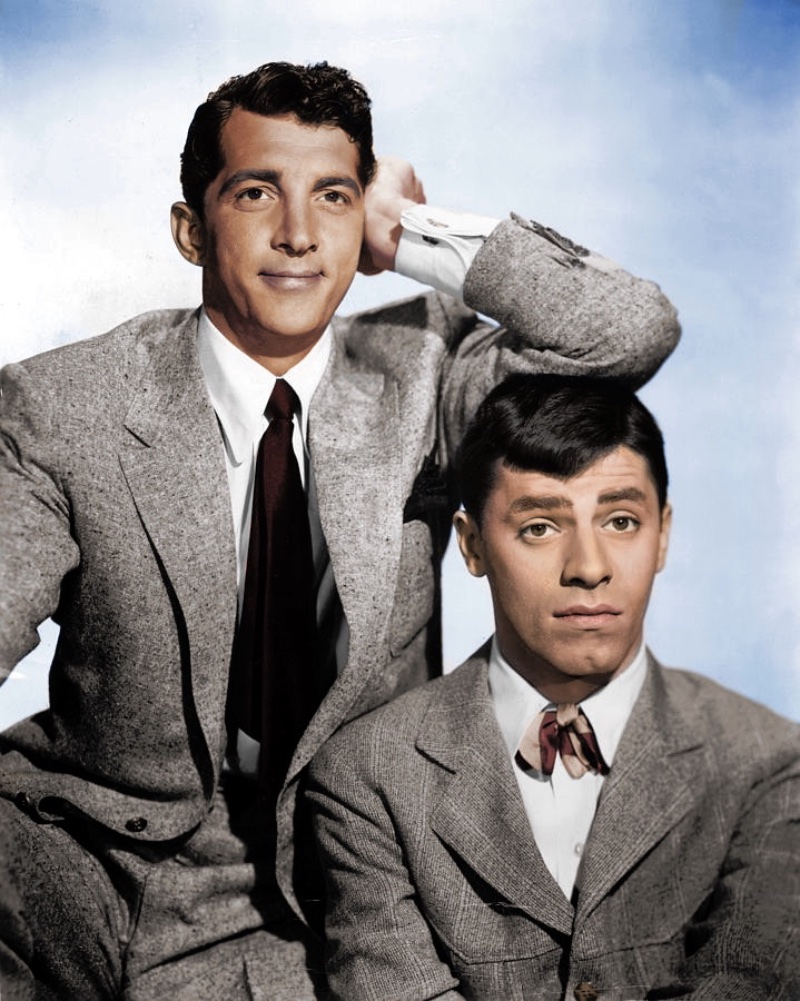
The suit remained central to the adult male wardrobe throughout the 1950s, particularly for business, church, travel, and occasions that called for more formal dress. Single-breasted jackets became increasingly prominent, while double-breasted suits continued to be worn. As the decade progressed, tailoring generally moved away from some of the fullness of the 1940s toward narrower lapels and trimmer proportions.
The Sack Suit & American Business Style
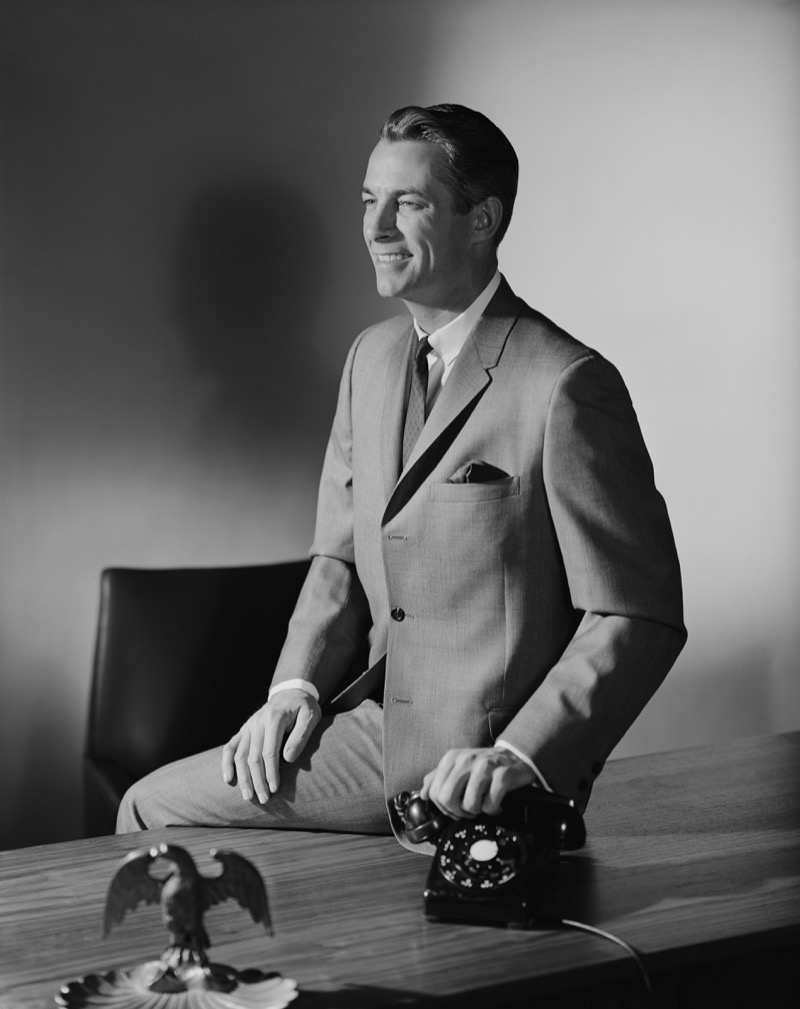
The sack suit was a defining form of American business tailoring during the 1950s. Developed long before the decade and closely associated with Ivy League dress, its distinguishing features included an undarted front, natural shoulder, relatively straight body, and restrained shaping through the waist. Three-button versions, including the soft-rolled 3/2 configuration, were particularly important to the Ivy tradition, although two-button suits were also widely worn.
Wool remained the foundation of the business suit, with worsteds, flannels, and other woolen fabrics suited to different seasons and levels of formality. Mohair and wool-mohair fabrics offered another option, while synthetic fibers increasingly entered the clothing market. Traditional tailoring could include canvas and haircloth interlinings to shape the chest and lapels.
Gray, charcoal, navy, and brown provided the backbone of the business palette, joined by patterns such as pinstripes, checks, and subtle textures. White dress shirts remained ubiquitous, while ties gradually became narrower as the decade progressed. Three-piece suits continued to appear, although the two-piece suit increasingly defined the everyday corporate wardrobe.
The Continental Influence
By the late 1950s, American menswear also embraced a more fitted alternative to the sack suit. Styles marketed as Continental drew on European tailoring and favored a shorter jacket, narrower trousers, a more defined waist, and an overall closer fit.
Darts shaped the jacket through the torso, while details could include higher armholes, slanted or jetted pockets, and side vents. The silhouette anticipated the trimmer tailoring that would become increasingly visible during the early 1960s, offering American men an alternative to the comparatively straight lines of the sack suit.
The Rise of the Sport Coat
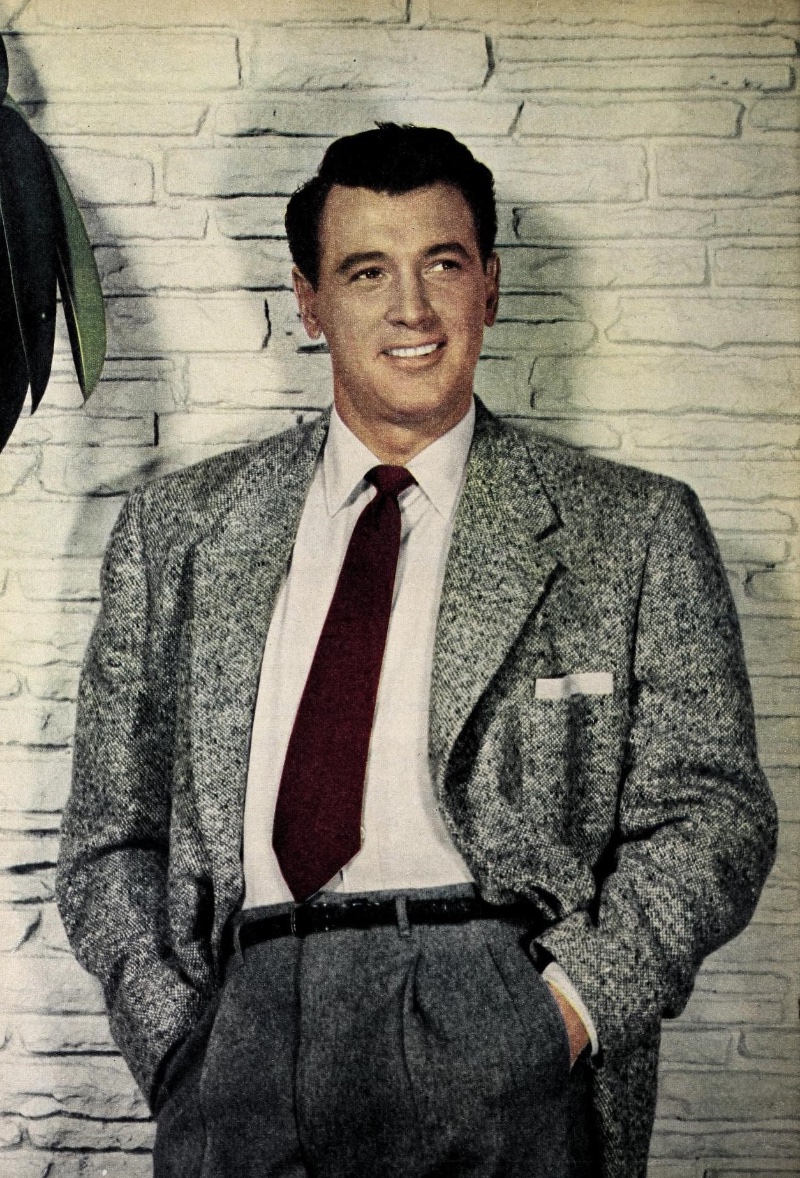
The sport coat gave men greater freedom with color, pattern, and texture than the business suit. Tweed, checks, tartans, herringbone, and other patterned fabrics could be paired with contrasting flannel trousers or slacks. Patch pockets, swelled edges, and natural shoulders reinforced its more casual character, while two- and three-button fronts were common.
Sport coats occupied the growing territory between the business suit and casual sportswear. Worn with wool trousers, chinos, an Oxford shirt, or knitwear, they suited restaurants, dates, sporting events, travel, and weekends. This versatility made tailored separates an important part of 50s outfits for men and helped establish combinations that would remain fixtures of American menswear well beyond the decade.
Waistcoats & Layering
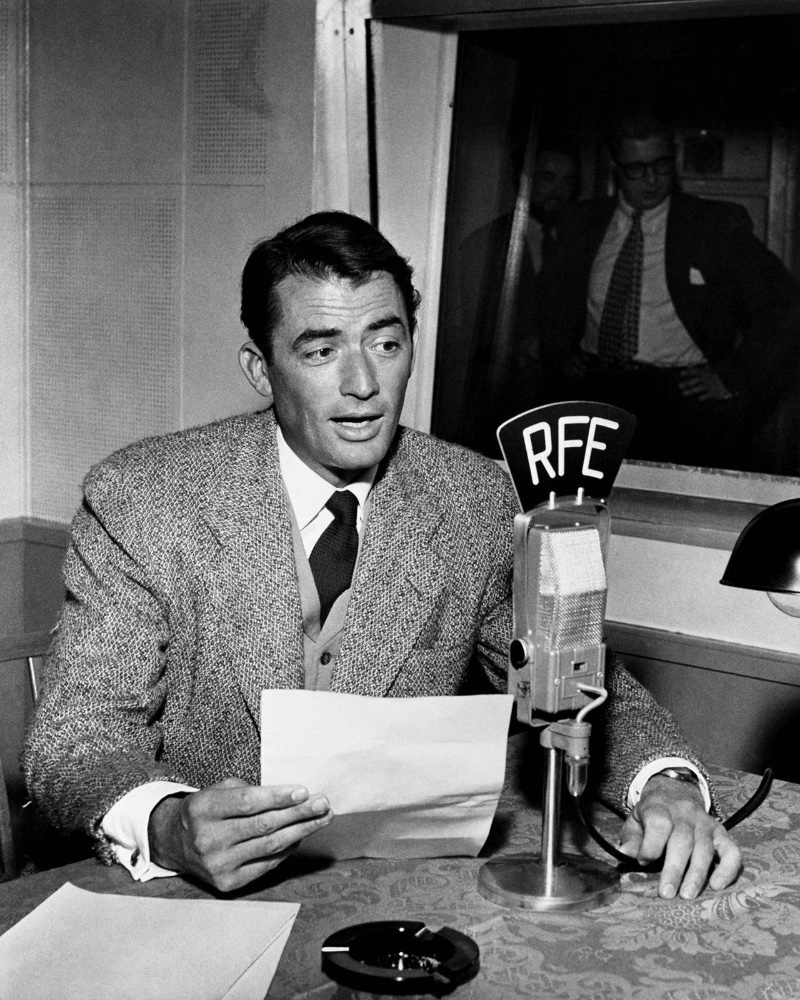
The waistcoat became less essential to everyday business dress during the 1950s as the two-piece suit gained ground. Three-piece suits remained available for men who preferred traditional tailoring, but increasingly a jacket and matching trousers were enough for the office.
Layering remained important elsewhere in the wardrobe. Sweater vests and V-neck sweaters could be worn over a shirt and tie beneath a sport coat, a combination closely associated with collegiate and Ivy League dress. Separate waistcoats also appeared in tweed and other textured fabrics, although they were less typical than knitted layers. These combinations allowed men to introduce color, pattern, and texture while retaining the tailored conventions of the period.
Overcoats & Outerwear
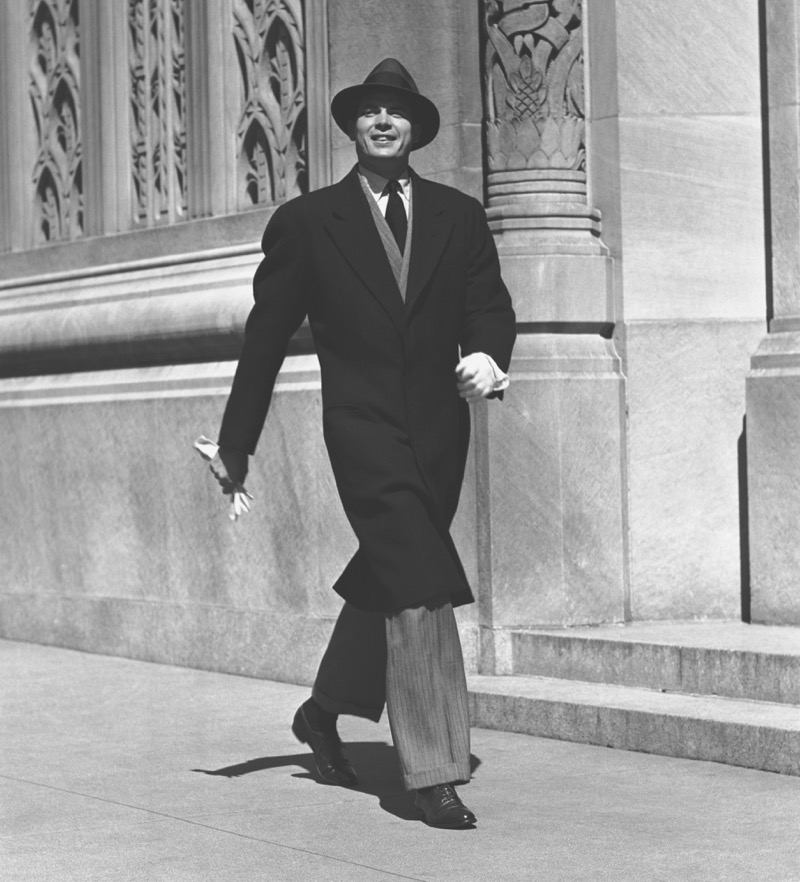
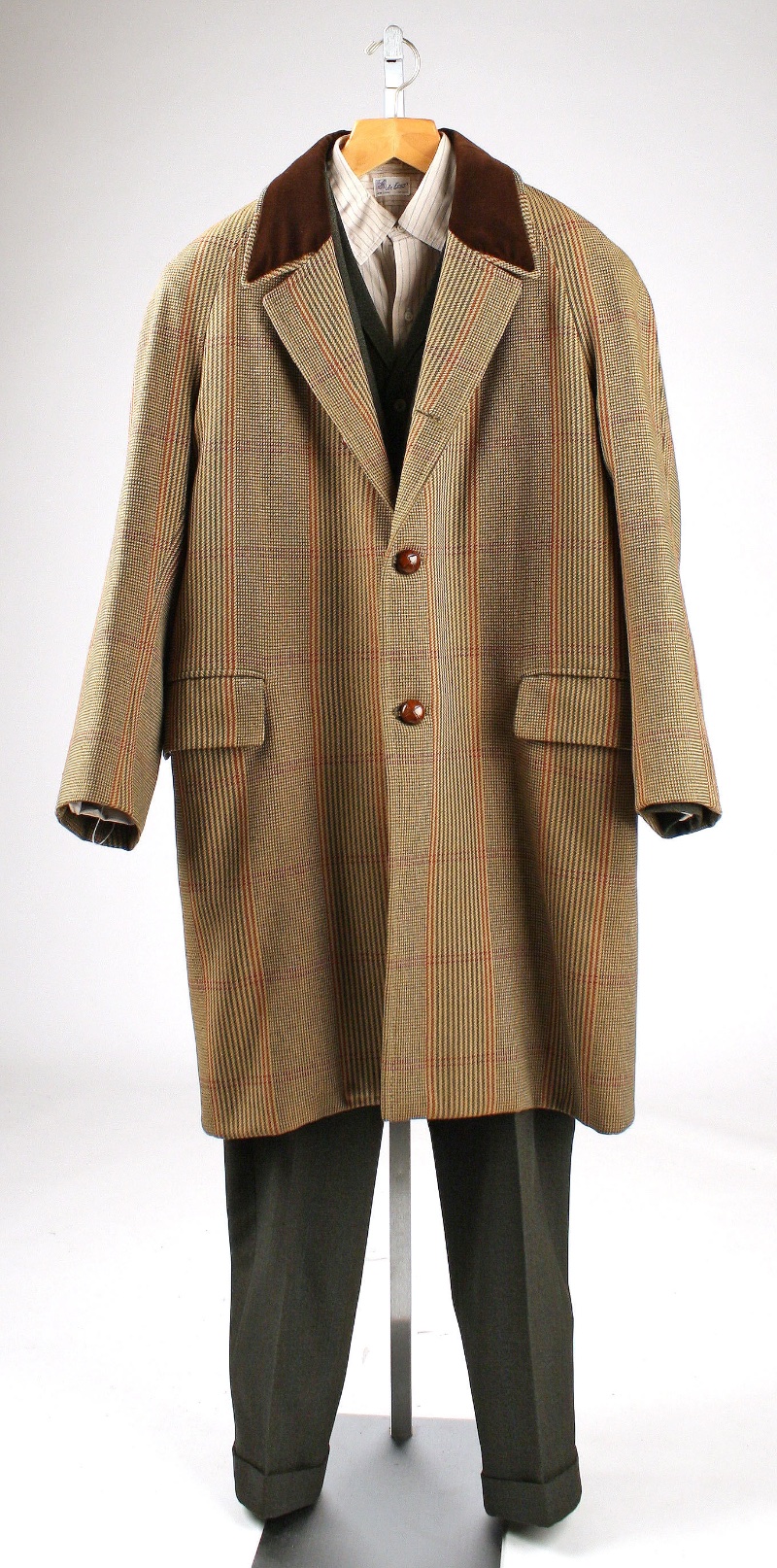
Overcoats remained an essential part of the tailored wardrobe, cut generously enough to fit over a suit jacket. Wool, tweed, and other substantial fabrics provided warmth, with charcoal, gray, brown, navy, and camel among the practical colors of the period.
Single- and double-breasted coats were both common. Chesterfields offered a relatively formal option, while Ulster coats could be recognized by their heavier proportions, broad lapels, and practical pockets. Double-breasted paletots provided another established tailored form. Raglan sleeves and fly fronts also appeared across period outerwear, giving men several choices depending on the coat’s intended level of formality.
1950s Men’s Casual Fashion
1950s Shirts: Collars, Cuffs & Details
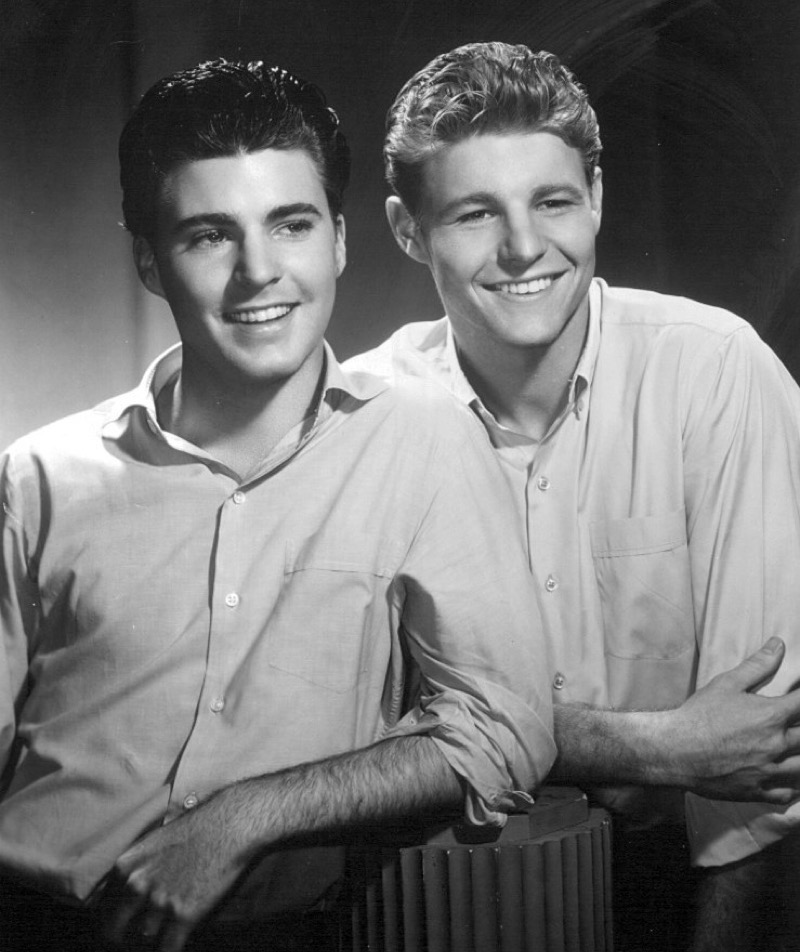
Attached collars were firmly established by the 1950s, leaving the detachable collars of earlier decades largely to specialized formal use. Business shirts remained relatively conservative, but 1950s men’s casual fashion opened the category to a much wider range of colors, fabrics, collar shapes, and patterns.
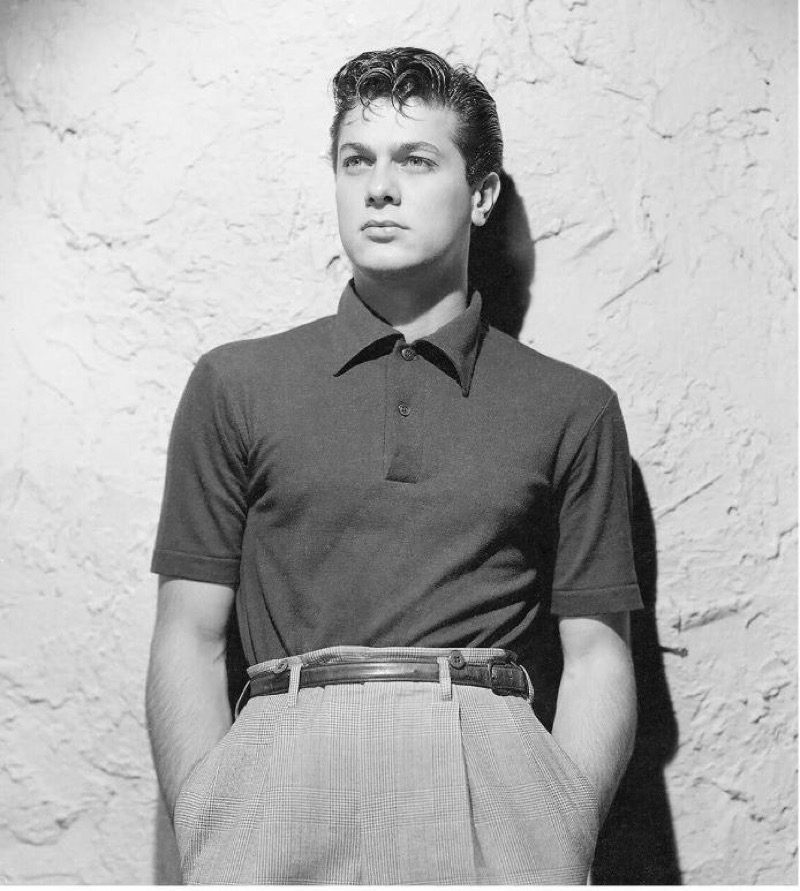
Collars varied according to the shirt and occasion. Point collars became shorter than many of the elongated spearpoint collars seen in earlier decades, while the Oxford cloth button-down was closely associated with Ivy League dress. Dressier point collars could also be worn with collar bars, pins, or clips. Casual sport shirts introduced open collars, loop collars, and other designs intended to be worn without a tie.
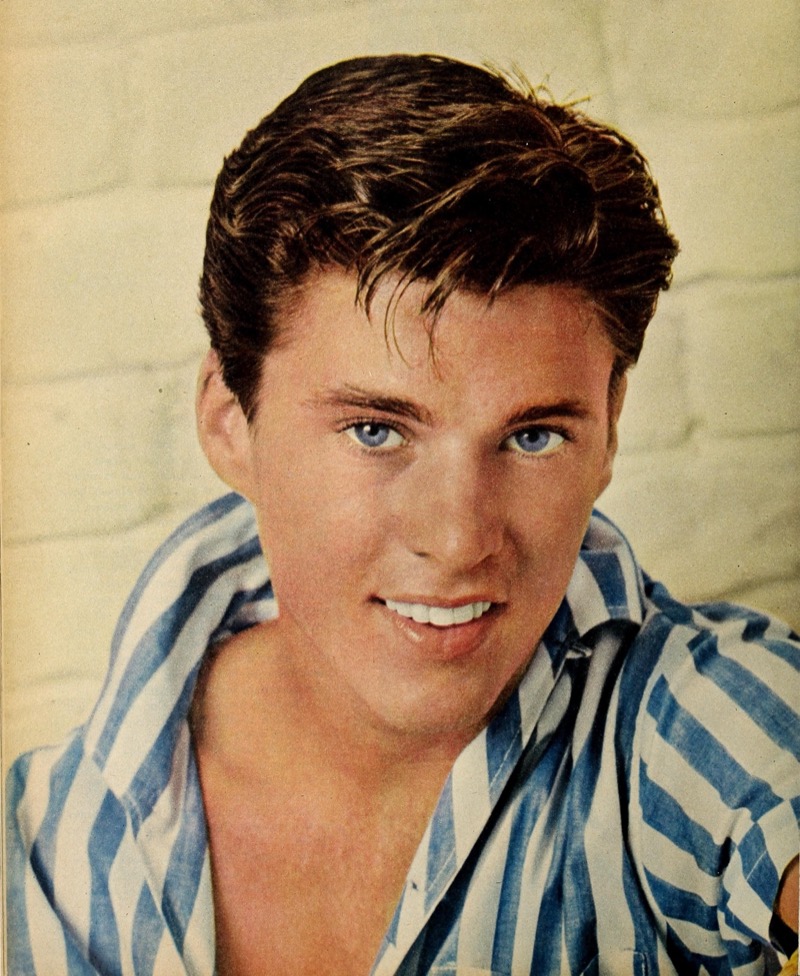
Stripes, checks, and plaids remained common, while the postwar appetite for color brought pink, mint, yellow, blue, and other pastel shades into men’s shirts. Printed sport shirts could go considerably further, particularly in leisure and vacation wardrobes.
Barrel cuffs were standard for everyday shirts, while French cuffs remained an option for dressier clothing. Single chest pockets were also common on both dress and casual shirts, providing a practical detail that suited the increasingly varied shirt wardrobe of the decade.
1950s Men’s Pants
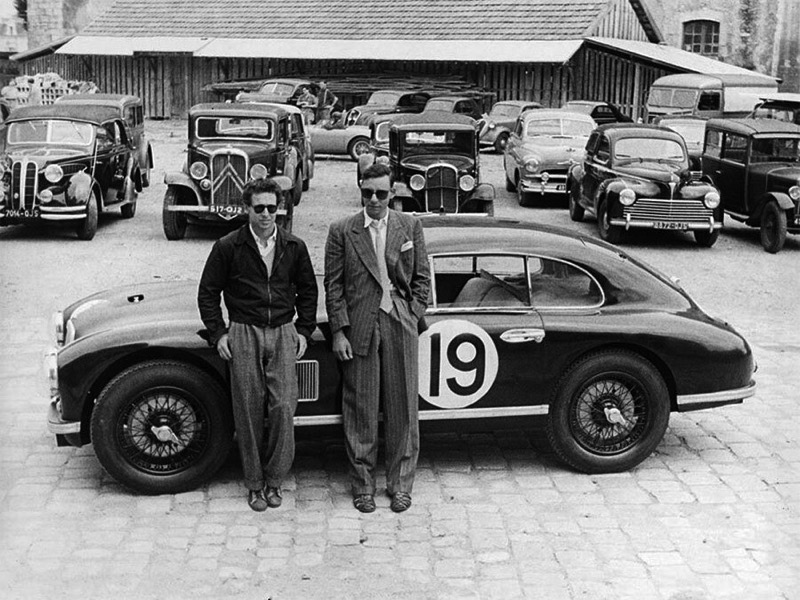
Trousers in the 1950s carried forward much of the volume seen during the previous decade. They generally sat at the natural waist with a generous cut through the seat and thigh, while straight or moderately tapered legs maintained the fuller proportions of contemporary tailoring.
Pleated trousers remained common, particularly with suits and more traditional tailoring, but flat-front styles gained ground during the decade. Ivy League dress helped popularize the cleaner flat-front trouser, often worn with a narrower leg than earlier postwar styles. Turn-ups, or cuffs, remained common, while some casual trousers featured self-belts, side adjusters, or other alternatives to the conventional leather belt.
Shorts & Summer Staples
Bermuda shorts became increasingly visible in American leisure and resort dressing during the 1950s. Their knee-length cut and tailored construction distinguished them from shorter athletic styles and allowed shorts to occupy a dressier place in the casual male wardrobe.
Many borrowed details from trousers, including pleats, pressed creases, belt loops, and structured waistbands. Plaids, checks, stripes, and brighter colors suited vacation and warm-weather dressing. Bermuda shorts could also be worn with knee-high socks and loafers, preserving an element of British colonial and Bermudian dress as the style entered the broader postwar leisure wardrobe.
At-Home Style & Leisurewear
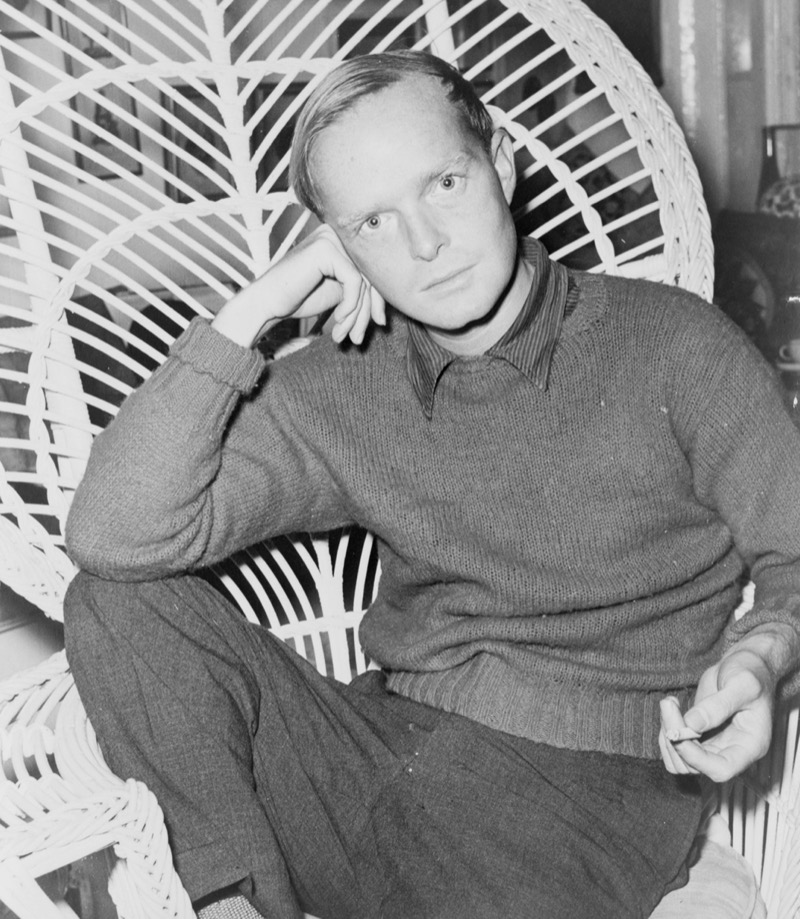
Leisurewear gave men alternatives to the tailored clothes expected at work and on more formal occasions. Casual jackets in gabardine, cotton, rayon, and other fabrics could be worn with slacks or chinos, while sport shirts offered short-sleeve and open-collar options for weekends and time at home.
Knitwear was equally important. Cardigans, V-neck and crew-neck pullovers, sweater vests, and heavier wool sweaters appeared in solid colors, argyle, stripes, and other patterns. These pieces crossed between home, campus, travel, and weekend wear, making knitwear a central part of the expanding casual wardrobe of the 1950s.
Accessories & Finishing Touches
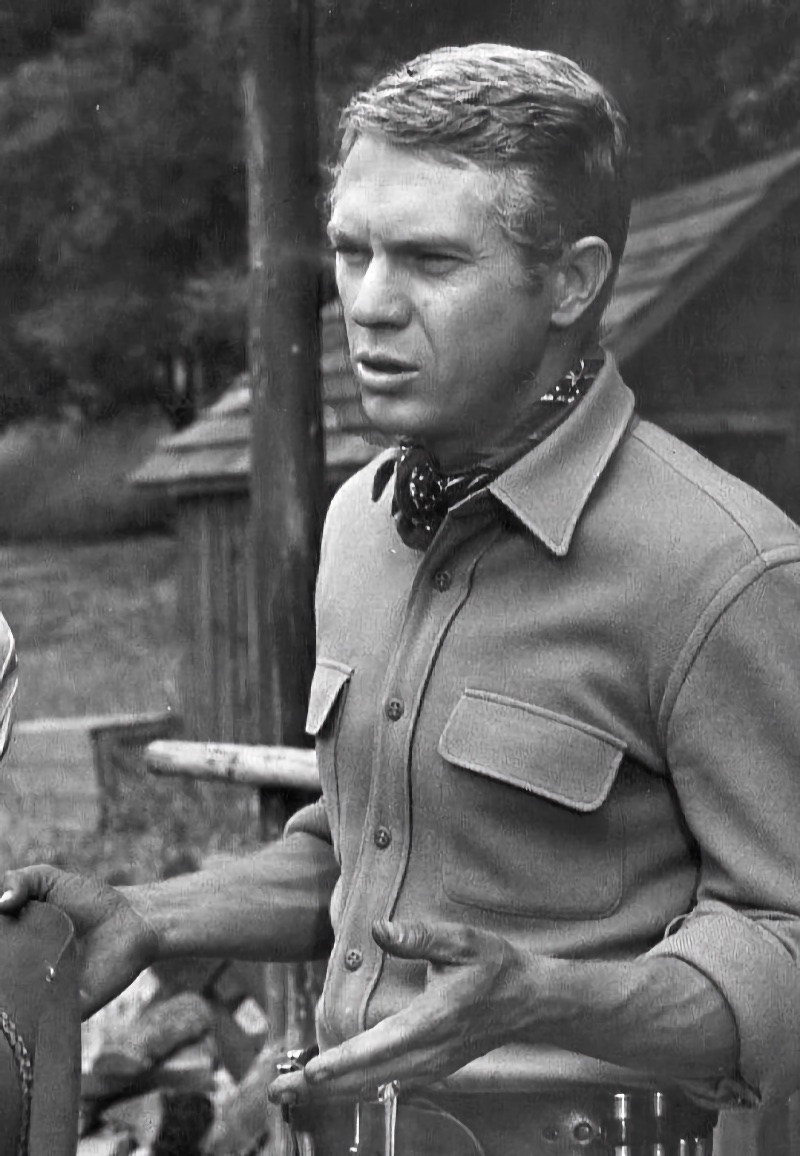
Accessories helped distinguish the different wardrobes of the 1950s. A businessman might finish a suit with a patterned tie, leather dress shoes, gloves, and a hat, while younger men adopted loafers, boots, bolder eyewear, and other details associated with collegiate or rock and roll style. Even relatively simple 1950s outfits could change character through footwear, neckwear, glasses, and grooming.
1950s Men’s Shoes: Trends & Fads
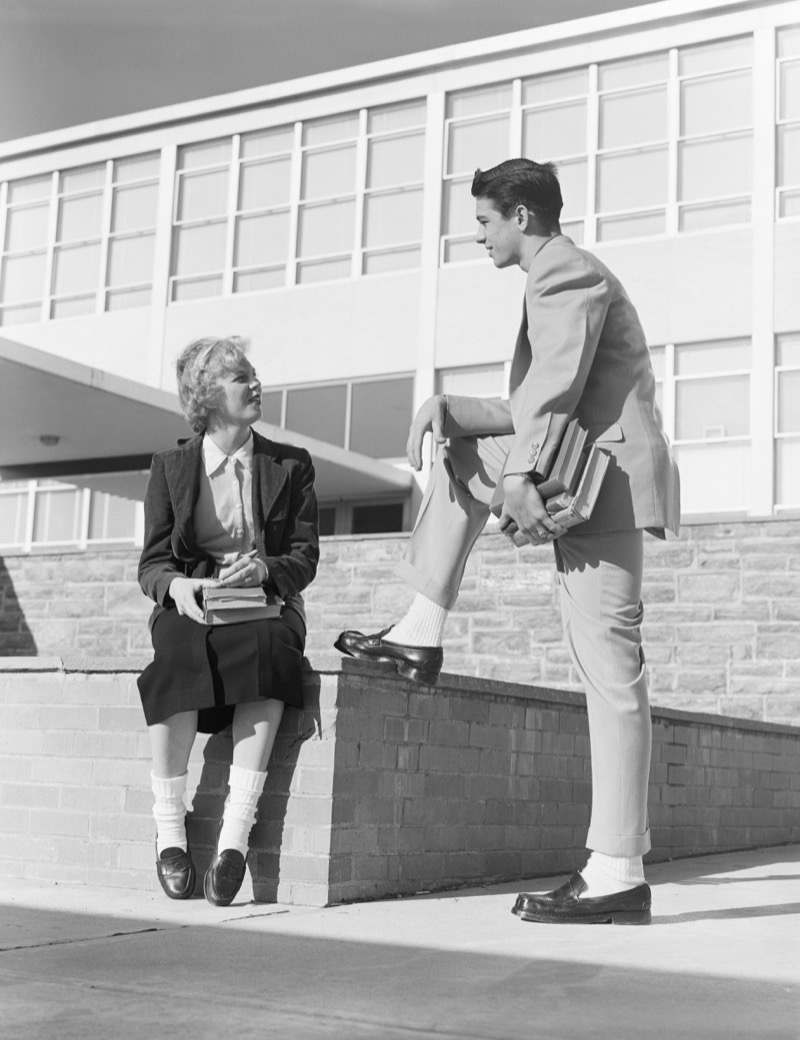
Black and brown Oxfords, Derbies, and brogues remained dependable choices for suits and business dress. Loafers occupied a more casual position, with penny loafers becoming closely associated with Ivy League and collegiate style. Two-tone saddle shoes also retained their connection to younger wardrobes.
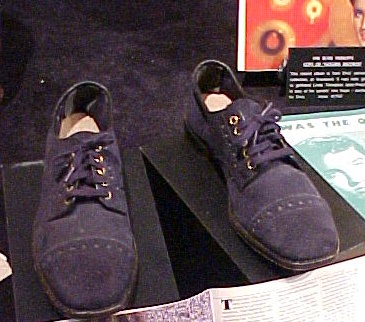
Blue suede shoes acquired an enduring connection to 1950s rock and roll through Carl Perkins’ 1955 song “Blue Suede Shoes” and Elvis Presley’s hit 1956 recording. Colored suede, two-tone combinations, and other less conventional footwear offered alternatives to standard black and brown leather.
The winklepicker emerged among British youth during the decade, recognizable by its sharply elongated pointed toe. Its association with Teddy Boys and rock and roll placed it far from conventional business footwear.
Boots also belonged to the period’s workwear and motorcycle wardrobes. Engineer boots, in particular, became part of the greaser and biker image, reinforced by films such as The Wild One.
Hats, Ties, Socks & Gloves
Hats remained common throughout the 1950s, particularly with suits and overcoats. Fedoras dominated business dress, while homburgs offered a more formal option and narrower-brimmed hats gained ground later in the decade. Hat-wearing was beginning to decline, especially among younger men, but it remained a familiar part of the adult male wardrobe.
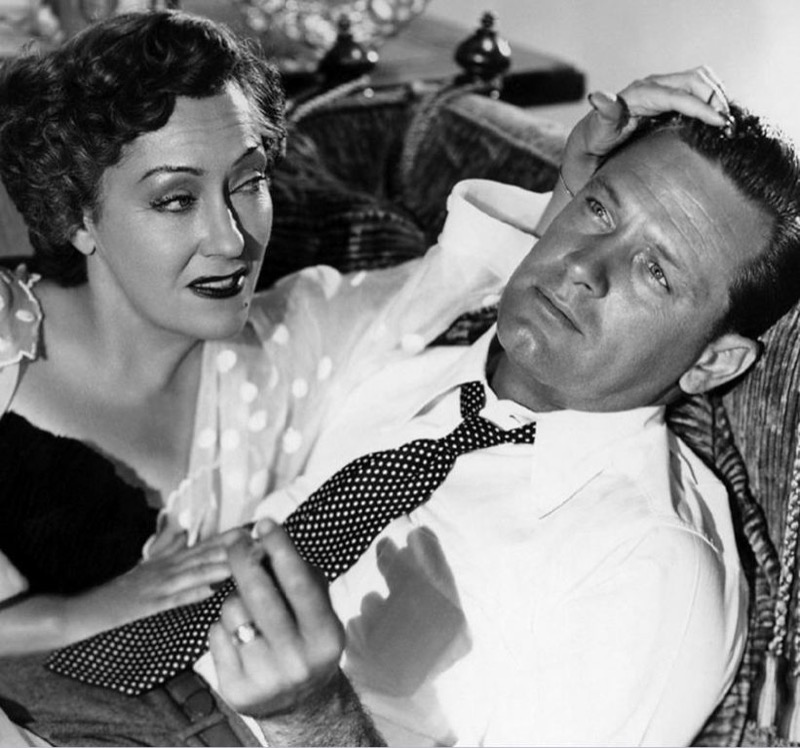
Neckties offered color and pattern within the tailored wardrobe. Early 1950s ties retained some of the width of the previous decade, while narrower ties became increasingly fashionable alongside slimmer lapels later in the decade. Stripes, polka dots, abstract geometrics, and small repeating motifs appeared in silk, rayon, wool, and knitted fabrics.
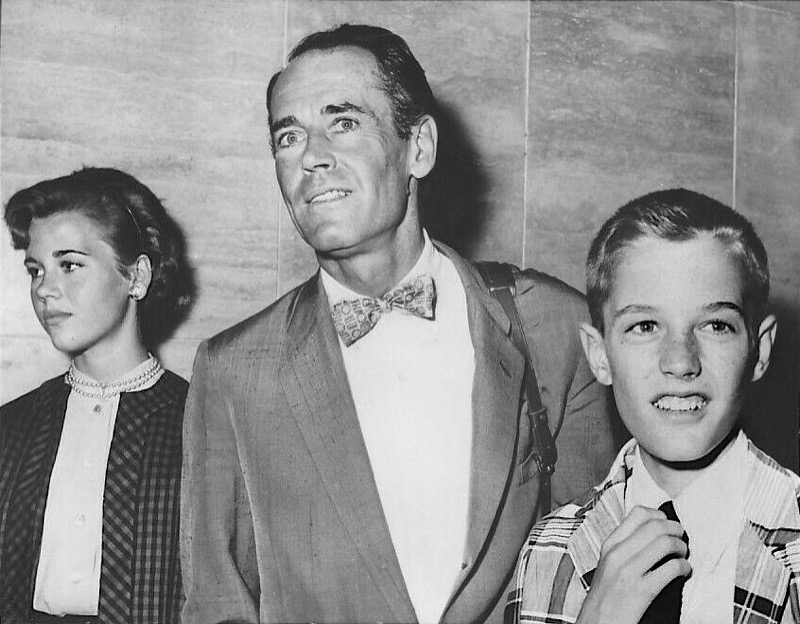
Black bow ties remained standard with tuxedos and dinner jackets, while patterned bow ties also appeared with everyday shirts and suits. Knit ties provided another casual option, particularly within collegiate dress.
Belts were increasingly common as everyday trousers moved away from suspenders, although both remained in use. Leather belts ranged from narrow dress styles to wider casual versions, while socks supplied another opportunity for argyle, stripes, and color.
Leather gloves and wool scarves remained practical cold-weather accessories, with dressier versions complementing overcoats and business clothes.
1950s Glasses & Eyewear
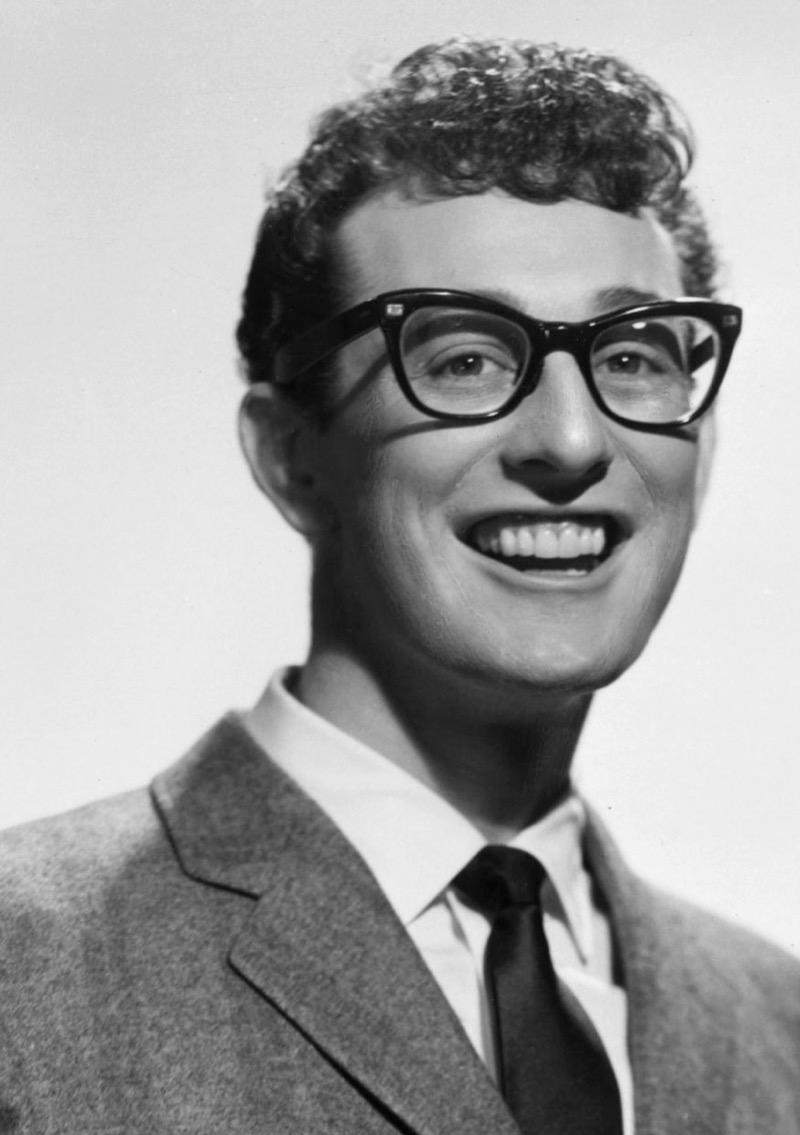
1950s glasses became increasingly visible as part of a man’s appearance, with distinctive frame shapes emerging alongside more traditional designs. Buddy Holly turned substantial dark frames into an inseparable part of his rock and roll image, while comedian Phil Silvers was similarly recognizable for his glasses.
Browline glasses were among the decade’s defining designs. First introduced before the 1950s, their heavy upper frame remained widely popular through the period, appearing in combinations of metal and plastic as well as different colors and finishes.
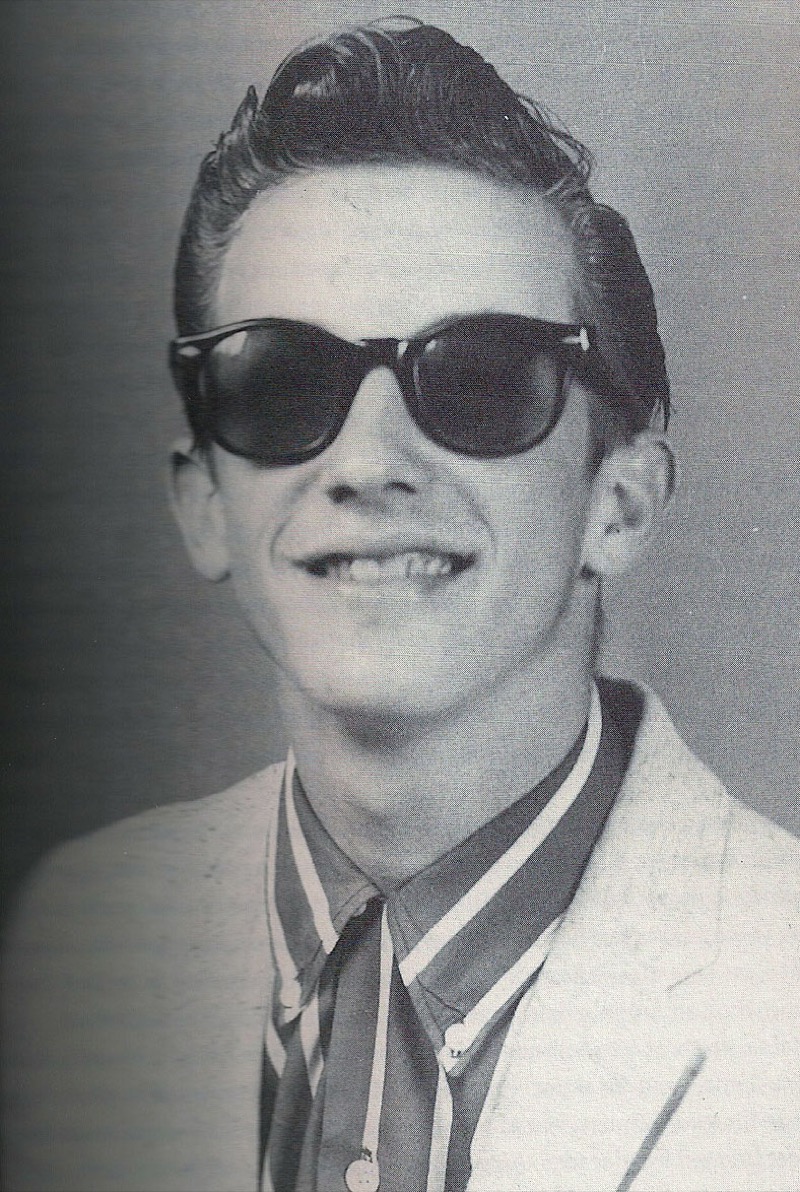
Sunglasses also acquired some of the shapes now associated with mid-century style. Ray-Ban introduced the Wayfarer in 1952, bringing a thick plastic frame to a market previously dominated by metal designs. Dark lenses and pronounced frames suited the decade’s growing overlap between eyewear, Hollywood, and youth culture.
1950s Materials & Mass Production
Fabric choices during the 1950s ranged from familiar natural fibers to newer man-made materials promoted for easier care and durability. Wool and cotton remained fundamental to menswear, while nylon, rayon, and newly commercialized polyester fibers expanded the possibilities available to manufacturers and consumers.
Natural Fabrics: Wool, Cotton, Denim
Wool remained essential to suits, sport coats, trousers, overcoats, and knitwear, with worsteds, flannels, tweeds, and other weaves serving different seasons and occasions. Cotton was equally versatile, appearing in dress shirts, Oxford cloth button-downs, chinos, T-shirts, sport shirts, and warm-weather clothing.
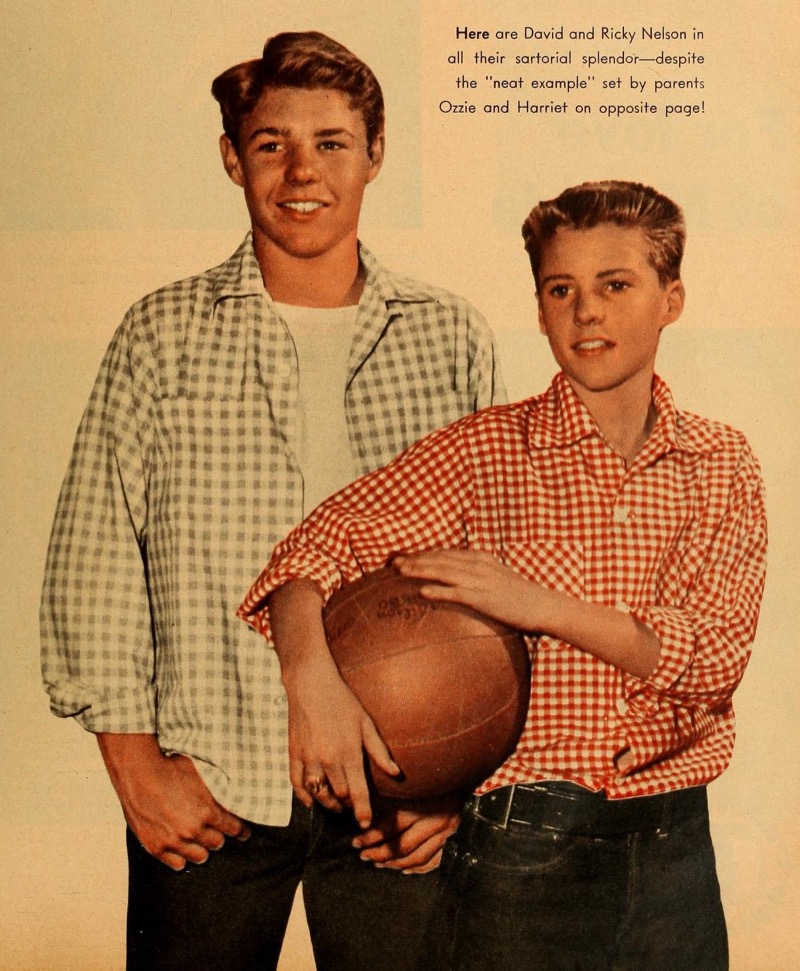
Denim retained its established place in American workwear while gaining greater visibility among younger consumers. Jeans appeared on figures such as Marlon Brando and James Dean, helping connect denim with the decade’s emerging image of teenage rebellion. By the 1950s, a fabric associated with miners, cowboys, farmers, and industrial workers was also becoming part of an increasingly distinct youth wardrobe.
Synthetics: Polyester, Rayon, Nylon
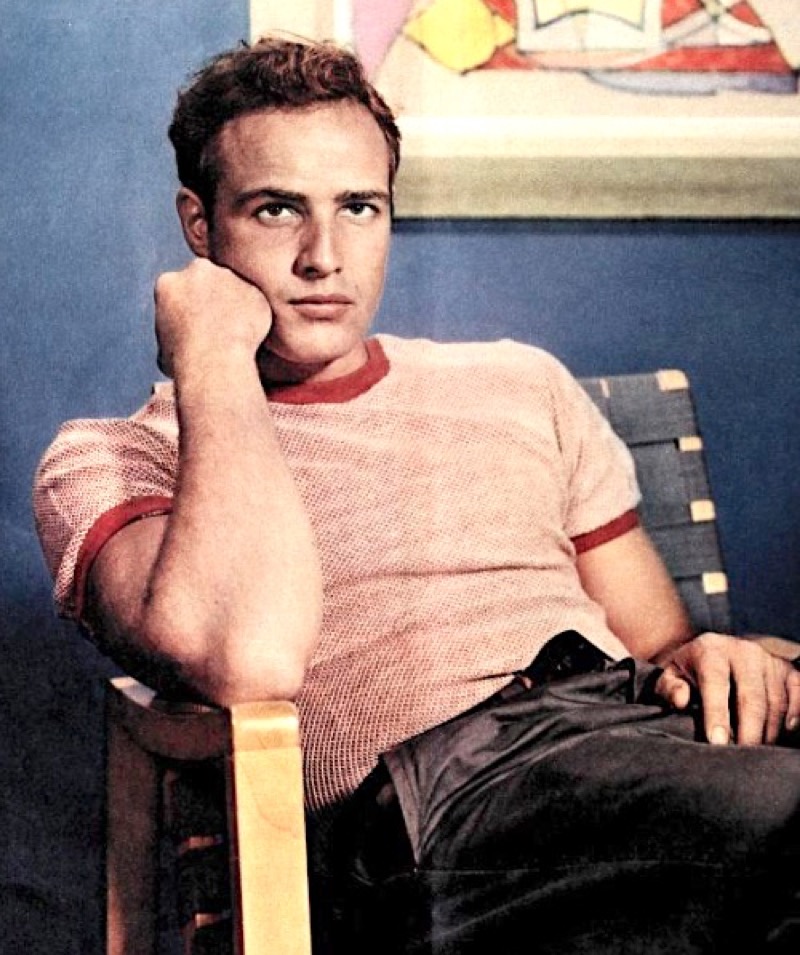
Man-made fibers were increasingly important to the postwar clothing industry, although they arrived at different times. Rayon was already familiar from earlier decades, while nylon had entered commercial production before World War II. Polyester was newer. DuPont introduced Dacron polyester fiber to the American market in the early 1950s, and manufacturers increasingly experimented with it in clothing and fabric blends.
These fibers appealed to manufacturers and consumers for practical reasons. Nylon offered strength and durability, rayon could reproduce different textures and drapes at relatively accessible prices, and polyester became especially attractive for its wrinkle resistance and ability to retain its shape.
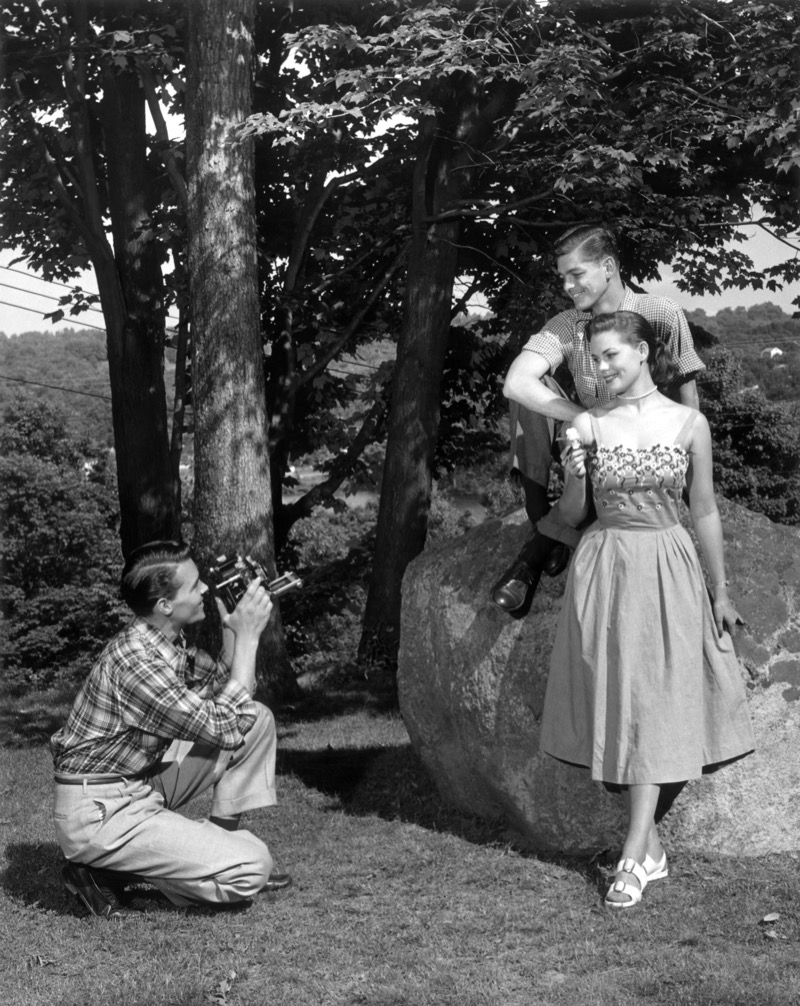
Blended fabrics became particularly useful because manufacturers could combine properties of different fibers. Wool or cotton blended with man-made fibers could offer easier care and improved durability while retaining some of the feel and appearance consumers expected from traditional fabrics. These developments laid important groundwork for the wash-and-wear clothing that would become an even larger part of menswear in the following decades.
1950s Men’s Hairstyles & Grooming
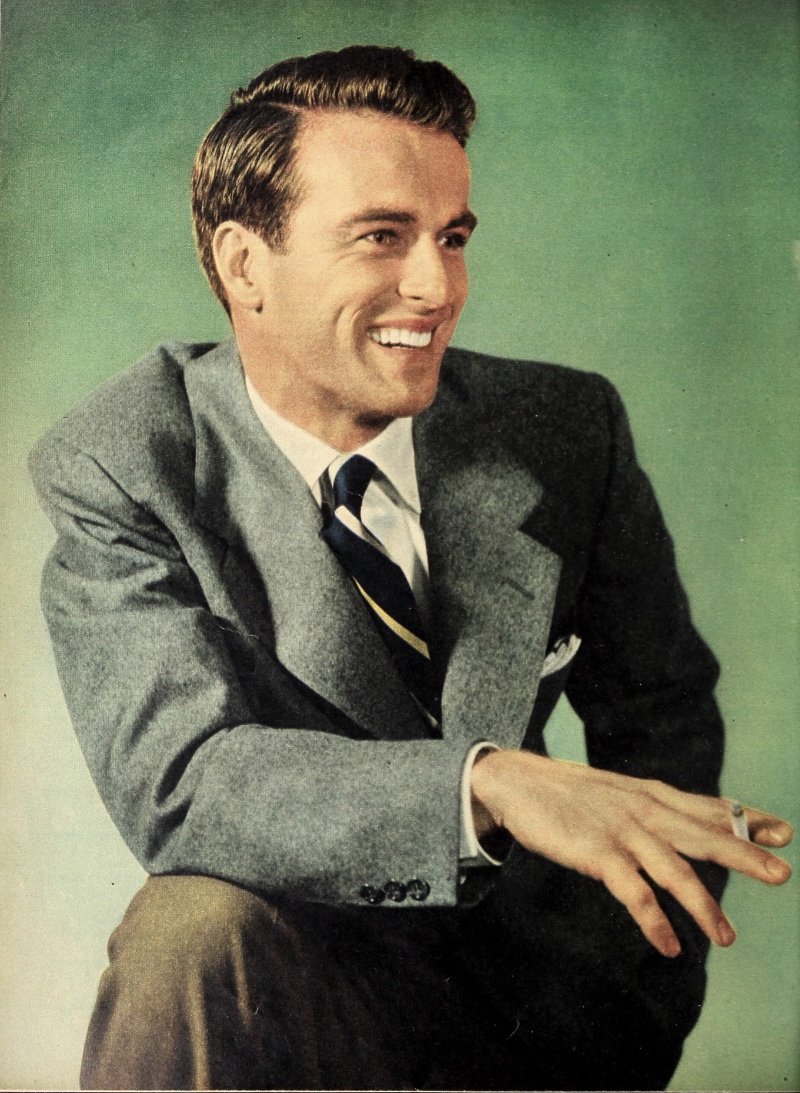
Hair became an increasingly visible part of men’s style during the 1950s as everyday hat-wearing gradually declined. Conservative cuts remained short and tidy, with the side part a standard choice, while younger men experimented with higher, more sculpted styles.
Pomade was essential to many of these looks. Brands such as Murray’s and Sweet Georgia Brown supplied the heavy hold and gloss needed for carefully shaped hair. Oil-based formulas could stay in the hair for days, leaving their mark on collars, pillowcases, and car seats.
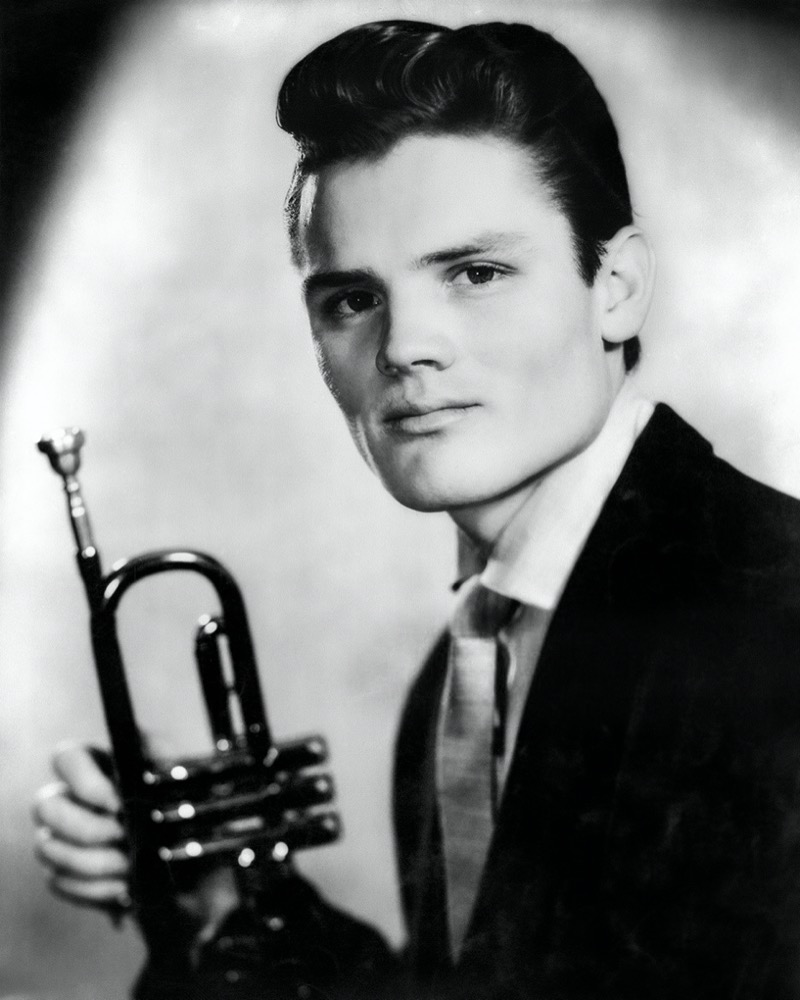
The pompadour swept the hair upward and back, becoming closely associated with figures such as Elvis Presley. The jelly roll created rolled sections at the front, while the ducktail, or DA, combed the sides toward a center seam at the back of the head. Both became associated with greasers, rock and roll, and Teddy Boy style.
The slick-back offered another pomade-heavy option, while crew cuts and flat tops represented the decade’s shorter end. Most men remained clean-shaven, although mustaches appeared on figures such as Clark Gable and Errol Flynn. From a conventional side part to a greaser’s ducktail, grooming could immediately signal which corner of 1950s menswear a man occupied.
The Enduring Influence of the 1950s
How to Get the 1950s Look Today
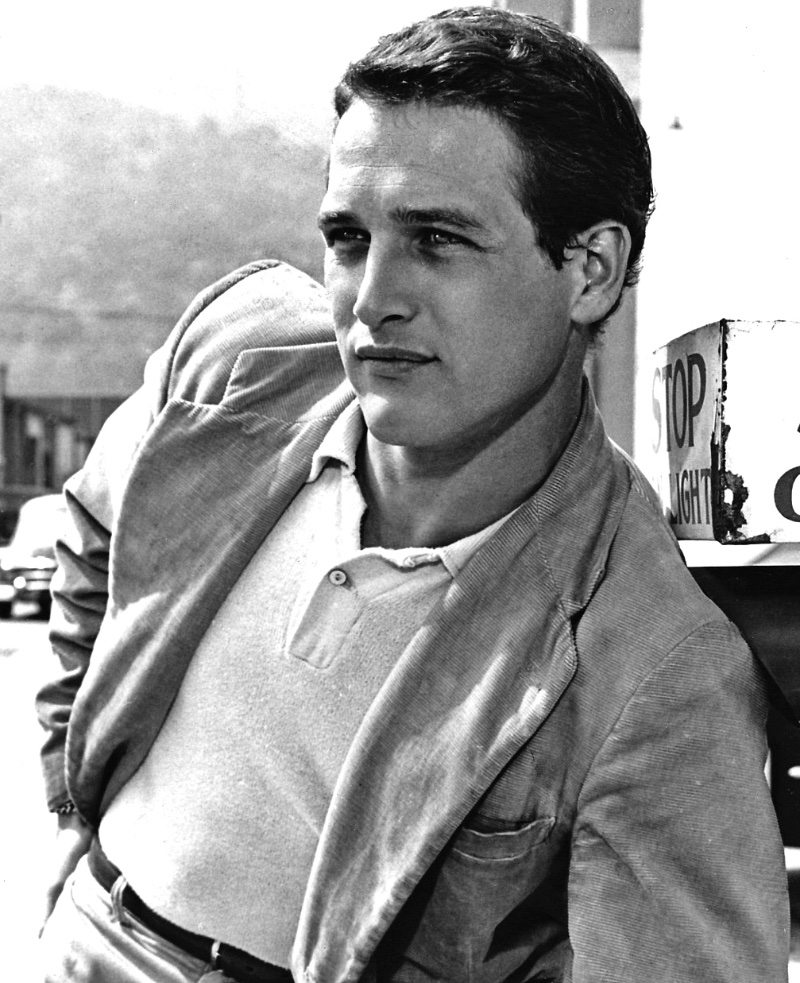
The easiest way to wear 1950s men’s fashion today is to borrow from one of the decade’s distinct wardrobes instead of recreating a period outfit from head to toe. Ivy style offers Oxford shirts, chinos, penny loafers, cardigans, and natural-shouldered sport coats, while the decade’s rebel image can be referenced through denim, white T-shirts, leather motorcycle jackets, and boots.
Fit makes these pieces easier to integrate into a contemporary wardrobe. Higher-rise trousers and fuller cuts capture the proportions of the period, while a polo or knit shirt with pleated trousers offers a subtler reference. Tailoring can follow the same approach through a navy or gray suit, a natural shoulder, and a narrower tie.
What’s Been Reclaimed
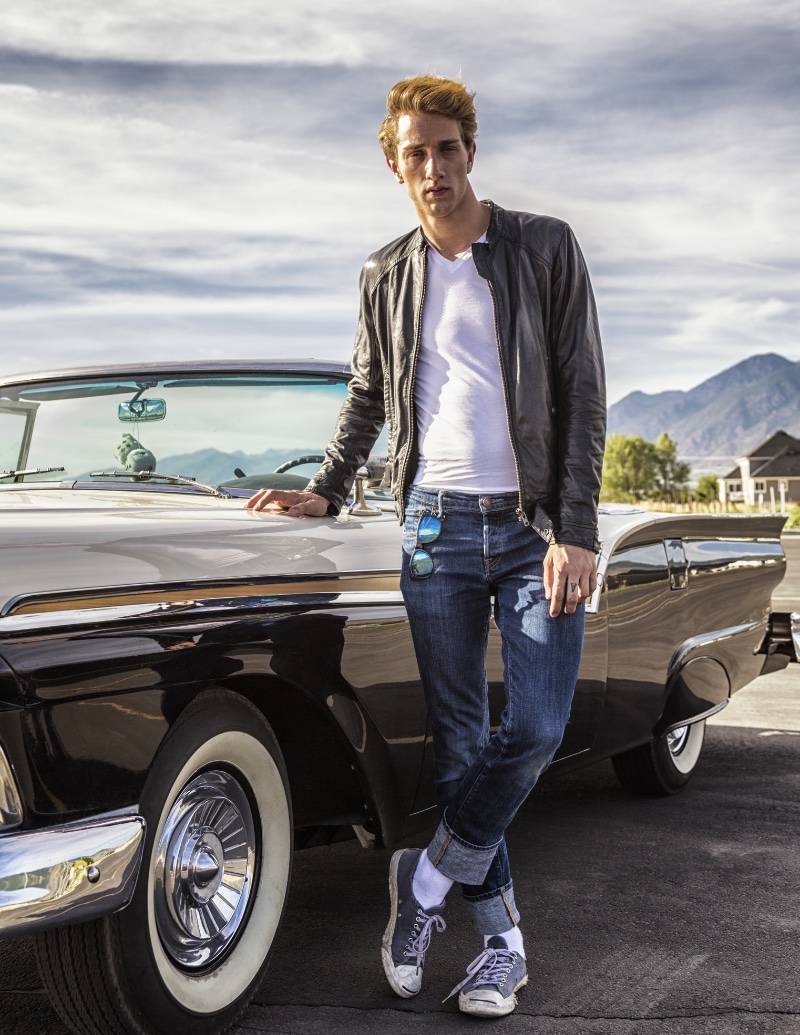
Many garments associated with the decade never really disappeared. Penny loafers, Oxford shirts, chinos, cardigans, polos, sport coats, denim, and leather motorcycle jackets remain familiar parts of menswear. Their combinations also survive. An Oxford shirt with chinos and loafers still carries an Ivy association, just as a leather jacket worn with a white T-shirt and jeans immediately recalls the rebel imagery of Brando and Dean.
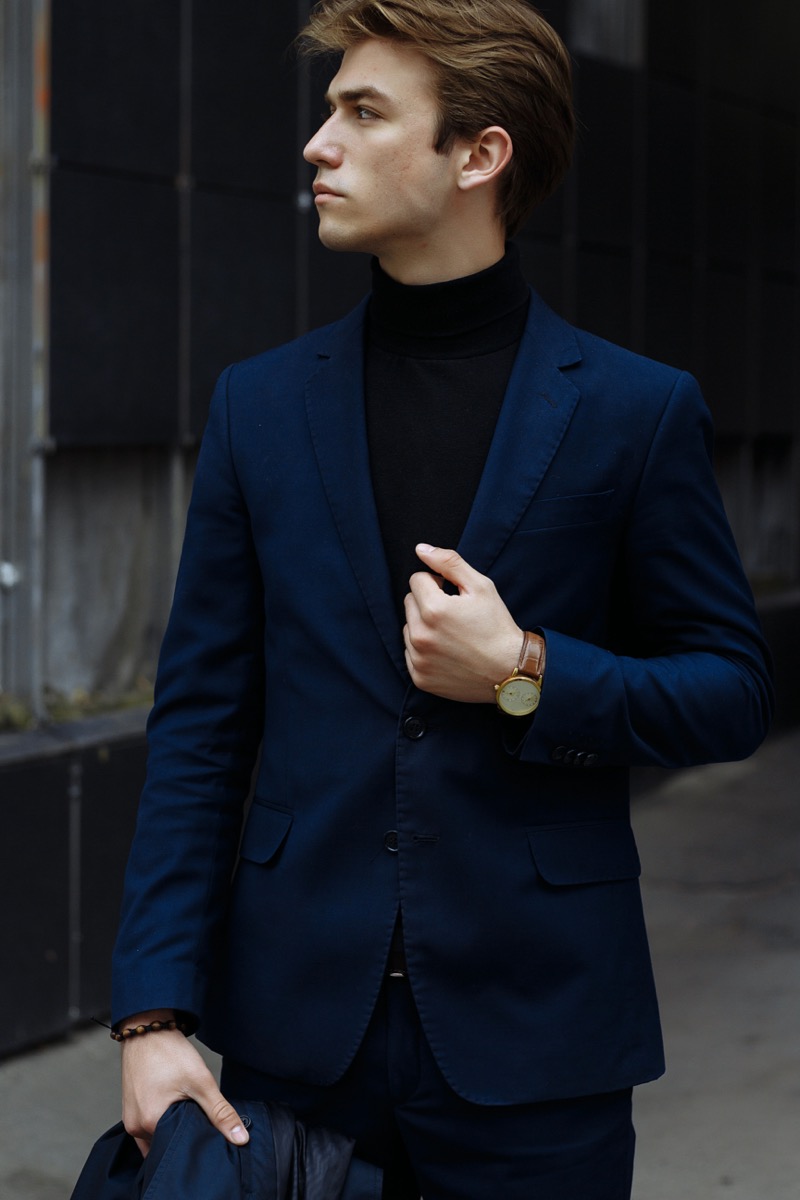
The decade also offers useful ideas about proportion. Natural-shouldered tailoring, higher-rise trousers, fuller legs, and relaxed sport coats can be incorporated individually, allowing the period influence to register through cut instead of costume.
By the arrival of 1960s men’s fashion, narrower tailoring, youth culture, music, and changing dress codes were pushing menswear further from postwar conventions. What survives from the 1950s is a remarkably practical set of choices, from Ivy staples and casual knitwear to denim, leather jackets, and traditional tailoring.